
How Distance Healing Sessions Are Run
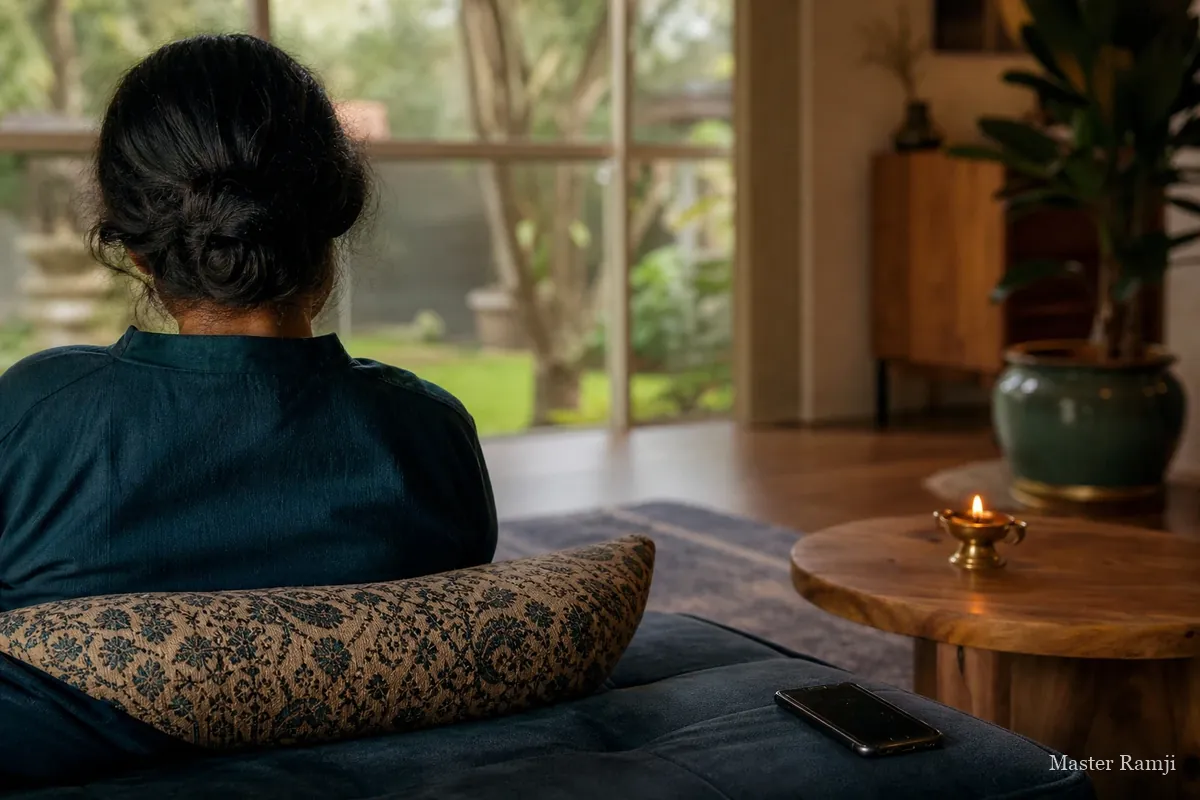
A distance healing session usually starts with a phone or video conversation about what you hope for, followed by a period of prayer, mantra or focused intention while you rest quietly at home, and then a short debrief. Ask beforehand about format, fees, privacy and consent. It remains a spiritual practice, not medical care.
Distance healing can sound vague until someone explains how it is organised. Who calls whom? Do you stay on the line? What if you are in Tarneit, the healer is in Ascot Vale and your mother, who is the one unwell, lives in Chennai?
This page deals with the format. It explains how a distance healing session is usually set up, what you should settle beforehand, and how to protect yourself and your money when you can't meet someone face to face.
Key takeaways
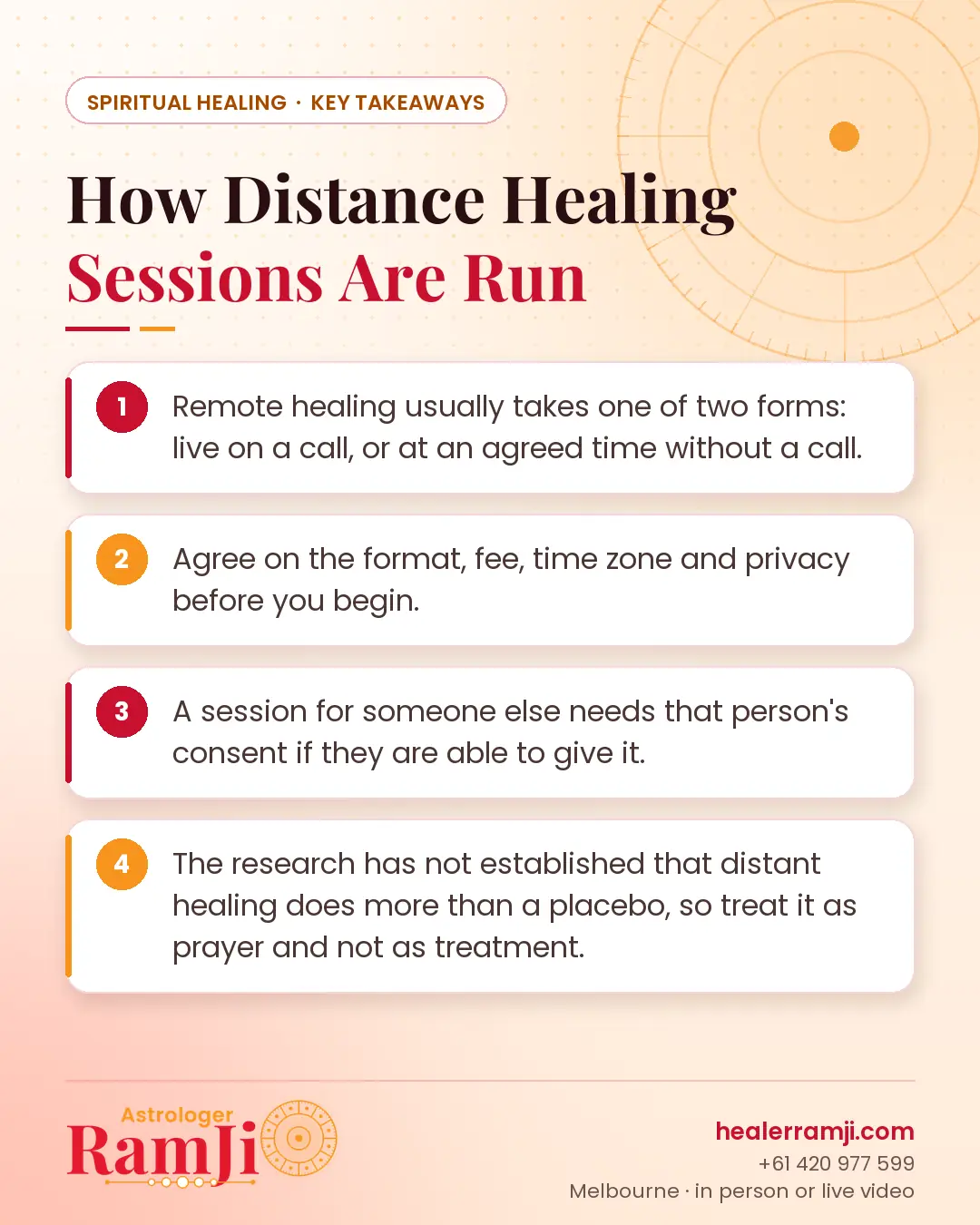
- Remote healing usually takes one of two forms: live on a call, or at an agreed time without a call.
- Agree on the format, fee, time zone and privacy before you begin.
- A session for someone else needs that person's consent if they are able to give it.
- The research has not established that distant healing does more than a placebo, so treat it as prayer and not as treatment.
What does distance healing mean?
You may see it called distance, distant or remote healing. They all describe the same basic idea: the healer and the person receiving the healing aren't in the same room. Praying for someone far away is old and common across faiths. In Hindu practice, a priest may name a person in a sankalpa, the stated intention at the start of a rite, whether or not they are there. You can read about this in whether a puja can be done without you.
A healing session is a modern, arranged version of that same impulse, with a set time and a clear agreement.
What formats do remote sessions take?
Live on a call
You and the healer are connected by phone, WhatsApp or video for the whole session or for parts of it. Many first-timers prefer this, because they can ask questions as they arise and hear what is being done.
Agreed time, no call during the quiet part
You talk first, then hang up and rest while the healer works at an agreed time. You speak again afterwards, or get a brief message. This can suit people who find a phone distracting, or who have trouble staying online.
Absent work
The healer prays or works without any live contact at all. It takes the least effort, but it is also the hardest for you to check. Be clear about what was done, when, and what you are paying for.
How does a typical remote session run?
- The booking. You agree on a time, a format and a fee in writing, even if it is only a text message.
- The opening talk. You describe what you hope for and mention any medical care. The healer explains the method.
- The quiet part. You sit or lie comfortably while the healer works through prayer, mantra or intention.
- The debrief. You share what you noticed. The healer may suggest something simple to do at home.
For more on how the first session feels, see what to expect at your first energy healing.
How should you set up at home?
- Sort out the time zone. Melbourne moves on and off daylight saving, and India doesn't use it. If a relative overseas is taking part, confirm the time in both places.
- Test the connection. Charge your phone and agree on what happens if the call drops. A WhatsApp call needs steady data, so have a backup.
- Close the door. Tell the household you need some time, and put other notifications on silent.
- Stay put. Don't take a session while driving or at work.

What should you ask beforehand?
Good questions to settle before you pay:
- Will we be on a live call, and for how long?
- What exactly will you do, and when?
- What is the full fee? Is there anything extra?
- Do you record calls? Who sees my messages and photos?
- What details do you really need from me?
- What happens if the call fails or I need to reschedule?
- Will you ever advise me on my medical care? The answer should be no.
Share only what is needed. A first name and a short description are often enough, unless a birth chart is also being read. Be careful about sending photos or identity documents, and don't give out passwords or banking logins to anyone.
Can you book a session for someone else?
This comes up often, especially with parents overseas. The answer depends on whether the other person agrees.
- An adult who can decide for themselves. Ask them first. It is their body and their beliefs. If they say no, respect that. You can still pray for them privately, as many families do.
- A child in your care. A parent or guardian decides, and the child's doctor stays in charge of their health.
- Someone too unwell to answer. Speak with their family and care team. Keep it to prayer, and leave all treatment to the doctors.
A session should never be aimed at changing how another person thinks or feels about you. That is a line no ethical healer should cross, so be wary of anyone who offers it.

Does the distance make a difference?
Traditions would say no, because they see intention and prayer as not bound by place. Research gives you no health effect you could rely on, near or far. A 2003 update of a systematic review concluded that newer, more rigorous trials shift the weight of the evidence against distant healing being more than a placebo. A 2009 Cochrane review of prayer for others found its evidence did not support a recommendation either for or against it. Both are dated, and a 2015 analysis reported a small positive effect while also noting problems with study quality, so the debate continues. You can read more in our page on the evidence.
So consider a remote session a spiritual act. Many people find comfort in knowing someone is praying for them, and that is a fair reason to take part. It isn't a reason to change any treatment. If you are unwell, see your GP or call healthdirect on 1800 022 222, and read about using healing alongside treatment.
How can you avoid remote scams?
Online and phone-only work attracts some bad operators. Walk away if someone contacts you first with a warning about a curse, asks for payment by gift card or crypto, keeps adding new fees, or says terrible things will happen if you stop. If money has gone missing or you are suspicious, Scamwatch explains what to do next, and your bank should hear from you quickly too.
How do we run distance healing?
Vijay Ramji is based in Ascot Vale, and appointments are arranged in advance. Sessions can be held by phone, WhatsApp or video, so where you live in Melbourne or beyond isn't a barrier. Fees are stated before any paid work, and what you share stays confidential.
See our energy healing page for more, or get in touch with your questions first.
Related service

Keep reading
The Seven Chakras Explained Simply
The seven chakras explained in plain language: what each name means, where tradition places it, which parts are old and which are modern, and what chakras cannot do.
Read article →
Chakra Myths You Can Safely Ignore
Seven chakras, rainbow colours, blocked chakras and crystals: common chakra myths set against what the Indian tradition actually taught, in plain language.
Read article →
A Grounding Practice for the Root Chakra
A simple ten-minute root chakra grounding practice you can try today, with breath, the seed syllable Lam and a short version for busy days. Plain and free.
Read article →Quick answers
What is energy healing?
Energy healing rests on the belief in a life force that can be guided. Here is what a session involves, and what the evidence does and doesn't show.
Read answer →Can spiritual healing replace a doctor?
Spiritual healing can't replace a doctor or prescribed treatment. Here is how to keep your faith alongside medical care, and which warning signs to watch for.
Read answer →Talk to Vijay Ramji
Tell us what you are facing. If a reading is unlikely to help, you will be told that plainly.