
Starting a Business in Dandenong: Timing and Practical Steps

To start a business in Dandenong with a muhurat, put the practical checks first. Ask Greater Dandenong Council what approvals your business needs, have a lawyer read the lease, and then choose several possible dates. A muhurat is a tradition of choosing a favourable time. It does not replace approvals or promise success.
Indian shops began gathering on Foster Street in about 1990, according to Greater Dandenong Council's history of the Little India Cultural Precinct. Today the precinct is centred on Foster and Mason Streets, with restaurants, grocers and, most famously, fashion and traditional wear. If you are thinking of opening near here, you may already be thinking about an auspicious day.
Before that date goes on the invitations, there are approvals to get and a lease to read. This guide puts the two tracks side by side, because the shop that opens at a chosen moment still has to be allowed to open.
Key takeaways
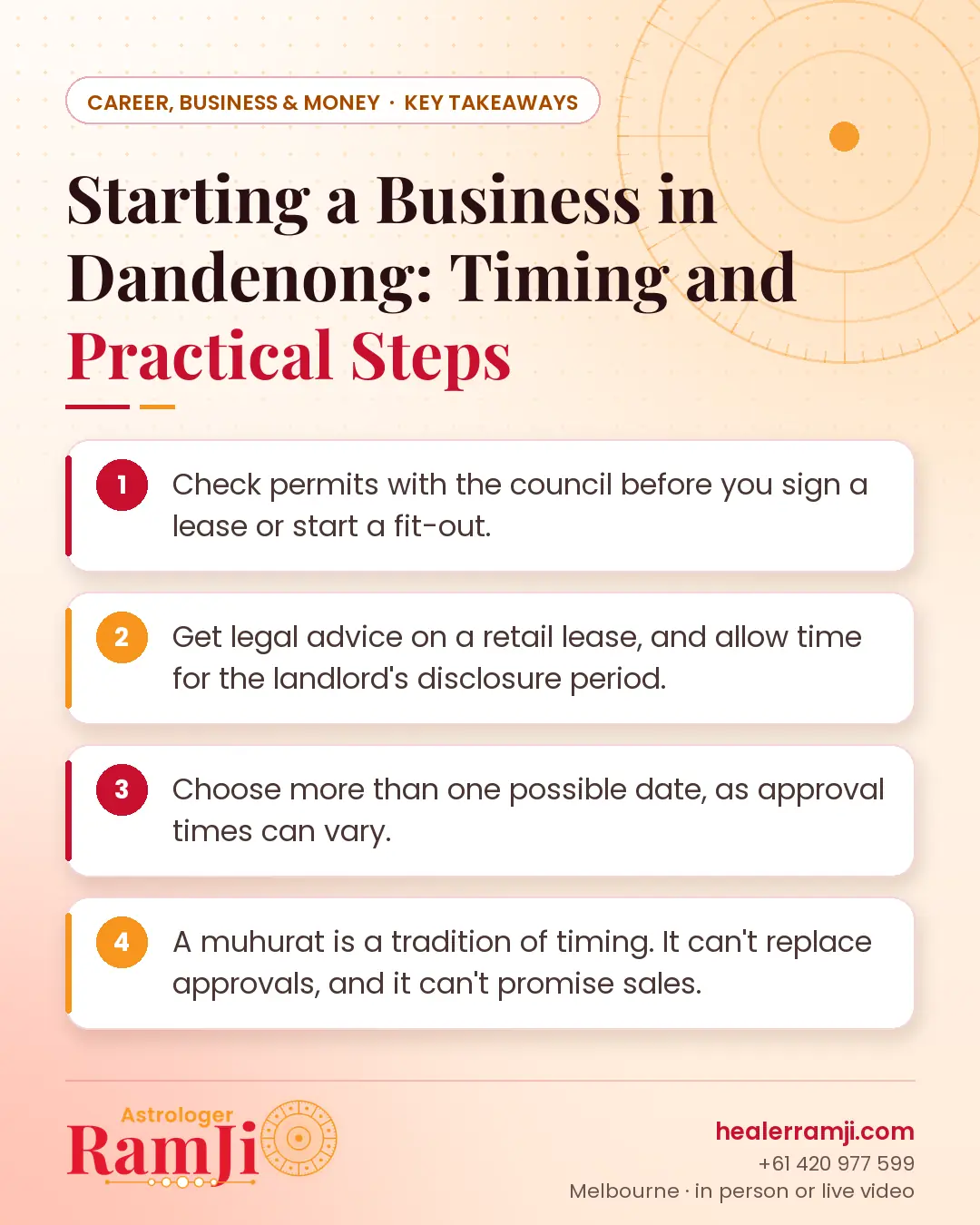
- Check permits with the council before you sign a lease or start a fit-out.
- Get legal advice on a retail lease, and allow time for the landlord's disclosure period.
- Choose more than one possible date, as approval times can vary.
- A muhurat is a tradition of timing. It can't replace approvals, and it can't promise sales.
Why should the muhurat come last?
Many people start with the date, then rush the paperwork to meet it. That is the wrong way round. A lease signed in a hurry can tie you to a site for years, and you could end up paying rent on a shop you aren't yet allowed to open.
So use the muhurat to plan around the real steps, and let the steps set the limits. Once you know roughly when you could legally open, the date can be chosen from that window.
What should you check with the council first?
Greater Dandenong Council's guide to starting a business is clear on the point: check what applies to the property and the type of business before you sign a lease or make any financial commitment. Its Business Permit Support Service can help you work out which permits and registrations may be needed.
The ones most likely to matter for a shop are:
- Planning permit. This can be needed for a change of use, for signs, or for building works. The council says it usually comes first, and that other applications depend on it.
- Building permit. This is separate from a planning permit. It can apply to structural or internal changes, and to changing the type of business, such as from an office to a shop.
- Health registration. This applies to food businesses and to personal services such as hairdressing.
- Local laws permit. This covers footpath trading, including A-frame signs, outdoor tables and chairs, and goods on display.
That last one is easy to overlook on a shopping strip. If you picture racks of clothing or a sweets table on the footpath at your opening, ask about it first. Signs need the same care. The council has also done branding, signage and façade work in the precinct over the years, so ask whether anything specific applies to your site. Local news reports in August 2026 also said demolition had started for a redevelopment beside Foster Street, with some Little India shops moving temporarily and a new laneway planned. If you are looking nearby, ask the council and the landlord how that could affect your site and lease.
A former tenant's business doesn't settle the question either. A site that once sold clothes won't automatically suit a restaurant.

What should you look at in the lease?
Most shops will fall under Victoria's Retail Leases Act. The Victorian Small Business Commission's tenant brochure is a good plain-language summary. Among other things, it explains that:
- The landlord must give you a disclosure statement and the proposed lease at least 14 days before you enter into the lease.
- A retail lease is generally expected to run for at least five years, including any option to renew. A shorter term may need a waiver certificate from the commission.
- You should work out the rent, how it can rise, and the outgoings you will pay.
- You should budget for fit-out and for "make good" costs when the lease ends.
It also advises having a lawyer experienced in retail leasing review the lease. Please do. This guide isn't legal advice, and those rules can change. An accountant can also test whether the rent suits your likely trade.
Which moment should the muhurat mark?
A new business has several beginnings: signing the lease, registering the business, getting the keys, the opening puja and the first sale. Traditions differ on which one matters most. Many families focus on the opening, as it's when the shop starts serving people. You can read more in which moment counts, registration or opening day.
Be careful with the lease signing in particular. It's reasonable to prefer a good time for it, but never sign before your disclosure period and legal review are done, simply because the day looks good.
How is a business muhurat chosen?
A business muhurat is usually worked out from the Hindu calendar, or panchang. An astrologer looks at factors such as the lunar day, the nakshatra and the weekday, and often the rising sign at the planned time. Many also avoid periods like Rahu Kalam, which varies with local sunrise and sunset. Some consider the owner's chart too, and practices differ between regions and families.
One detail matters for a Dandenong shop. The calculation should use Melbourne's time and your actual location. A date copied from an Indian calendar or sent by a relative may not line up here. See why a muhurat should be worked out for Melbourne. Our business launch muhurat service works from your real options and your location.
What if the permits run late?
Plan for it, as the council itself says approval times vary with the type of permit and how complex your application is. A few ideas can reduce the stress:
- Ask for several dates. Two or three windows spread over a few weeks give you more room.
- Separate the puja from trading. A family blessing when you get the keys may be possible well before you open. Check first that it fits your lease.
- Don't promote one date too early. Print the invitations once the approvals are in hand.
- Never trade early to catch a date. The council says the right approvals need to be in place before you begin operating. A good time doesn't change that.
Festival periods can also be tempting, but think about whether you could cope with crowds in your first week. The Foster Street (Little India) Traders Association, formed in 2011, may be able to share what trading is like. Ask nearby shop owners too.
If you are planning a ceremony, read holding an opening puja at your Melbourne shop first. Check your lease and your insurer before using any open flame, and never cover or disable a smoke alarm.

What can't a muhurat do?
It can't bring in customers, fix a poor location or make a bad lease better. Nobody can tell you that choosing a particular moment will make your shop succeed, and you should be wary of anyone who says otherwise. Its value is in the meaning it gives your family, and in the pause it creates to start with care.
Your accountant, lawyer and council officer are the ones to ask about the rest. You can read more about our work in Melbourne's south-east. When you have a rough window, get in touch and we can go through your options.
Related service
Keep reading

Burnout in a City Job: What a Chart Can and Can't Tell You
Worn out by a Melbourne CBD job? See a GP first, then look at support at work. What career astrology can and can't add once your health is being looked after.
Read article →
Launching a Trade Business in Epping: Date and Paperwork
Starting a trade business in Epping? How to pick a launch date without delaying your ABN, licences or insurance, and what a business muhurat can and can't do.
Read article →
Staying or Leaving After Study in Geelong
Finishing at Deakin Waurn Ponds? How to weigh a career after study in Geelong against moving to Melbourne, using real job ads, commute tests and honest questions.
Read article →More from Melbourne's South-East

Spiritual Scams Aimed at New Migrants in Dandenong
How spiritual scams use language gaps and fear to pressure new migrants in Dandenong, and where to get help in your own language if you have already paid.
Read article →
Your First Visit to the Carrum Downs Temple
First time at the Shri Shiva Vishnu Temple in Carrum Downs? What to wear, shoes and food, how to move through the shrines, and how to arrange an archana or puja.
Read article →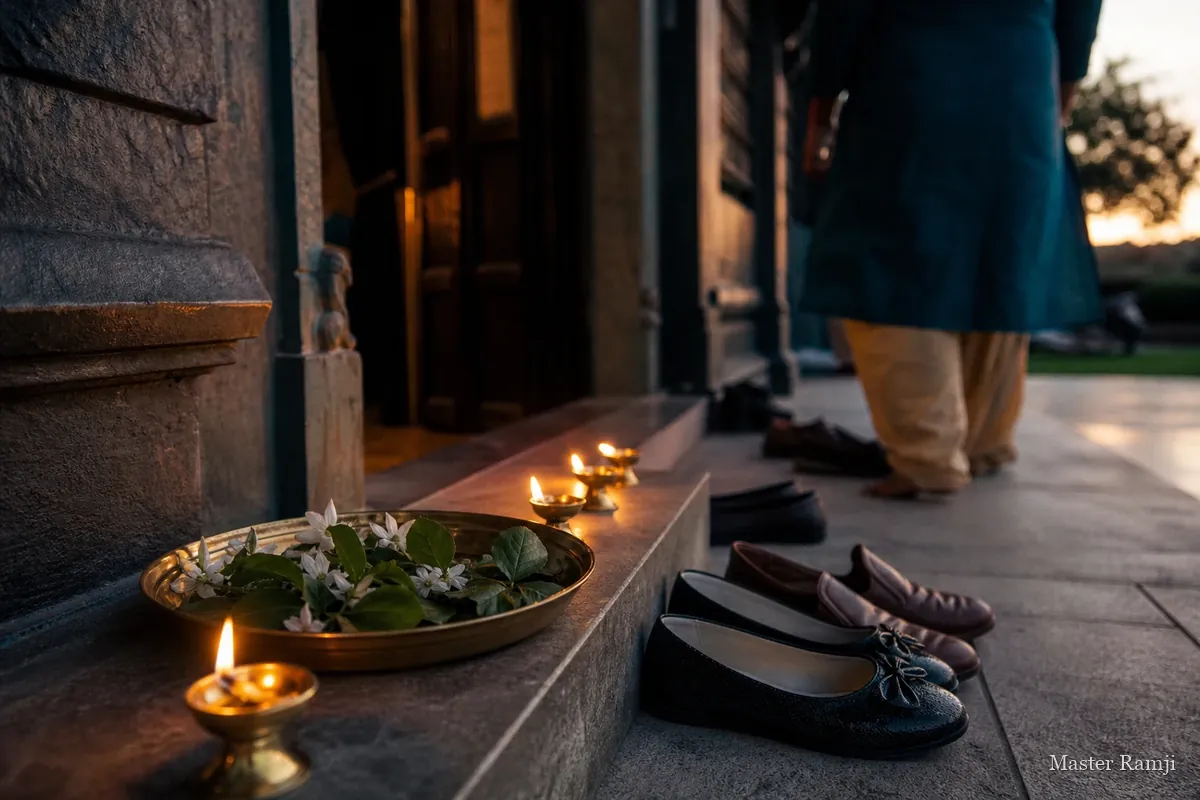
Maha Shivaratri in Melbourne's South-East
Keeping Maha Shivaratri in Melbourne's south-east with work the next day? How to plan the vigil, the fast and the drive home from Carrum Downs safely.
Read article →Local pages

Astrologer for Dandenong
For Dandenong traders and new arrivals: shop timing, vastu for premises, and how to check any spiritual adviser. Sessions by phone, WhatsApp or video.
View area →
Astrologer for Clayton
For Clayton students and graduates dealing with family pressure, relationships and first jobs. Vedic astrology by phone, WhatsApp or video, from Ascot Vale.
View area →Quick answers
What is a business muhurat?
A business muhurat is a date and time chosen by Hindu tradition to begin a venture. Here is how one is chosen, what it can't do, and how to fit your paperwork.
Read answer →Can astrology help me choose a career?
Astrology can prompt useful questions about work, but it can't pick your career. Here is what a chart may suggest, its limits, and who to ask for real advice.
Read answer →Talk to Vijay Ramji
Tell us what you are facing. If a reading is unlikely to help, you will be told that plainly.