
Palm Reading
What the hand is read for, with no scare stories.
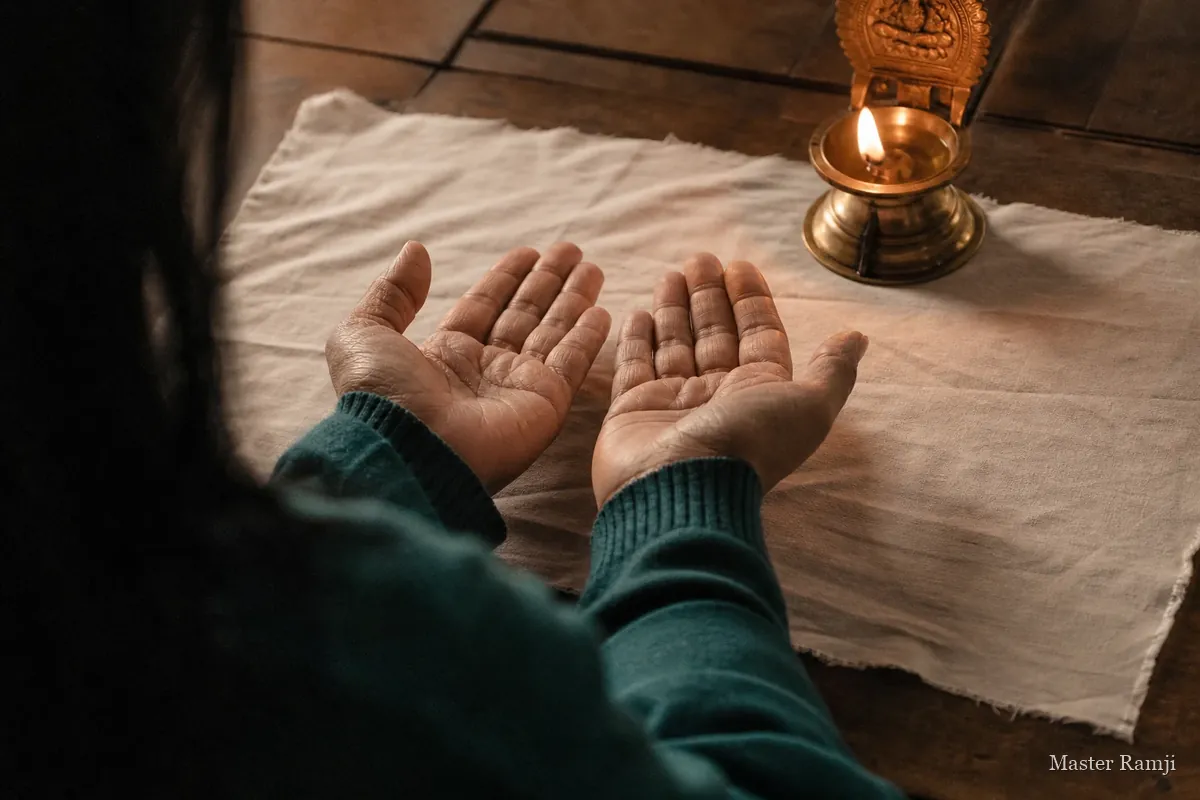
A palm reading is a traditional interpretation of the shape, lines and mounts of your hands, used as a prompt for reflecting on temperament and life themes. Palmistry has no scientific evidence behind it. A reading can work from clear photos, but it cannot foretell illness, death or specific events.
What is the hand read for?
Palmistry has been practised in many cultures, and in India it is treated as part of the wider samudrika tradition of reading the body. A reader looks at the whole hand before going near the lines. These are the main things a reader considers:
- Hand shape. The proportions of palm to fingers are read for general temperament, such as a practical or a restless nature.
- Fingers and thumb. Their length and flexibility are linked to how a person is said to make decisions and hold a position.
- Mounts. These are the raised pads below the fingers and at the base of the thumb, each traditionally named for a planet.
- Main lines. The life, head, heart and fate lines are read for themes of energy, thinking, feeling and direction.
- Minor marks. Small lines and crossings are used to add detail, and readers often disagree about them.
Our guide to the main palm lines goes through each line and what it is read for. None of these readings has been shown to work in a scientific sense. People enjoy palmistry as a tradition and a conversation, and it is best taken that way.
Who is palm reading for?
It suits people who are curious about the tradition, or who grew up with a relative who read hands and want to know more. It can also suit anyone who doesn't have a reliable birth time. A chart depends on that detail, while your hands are simply there to be looked at. If you do have your birth details and want timing, a kundli reading is the closer fit. For a related practice from the same tradition, see Samudrika face reading.
A reading isn't the right tool if you are worried about your health or anxious about something a previous palmist told you. In the first case, see your GP. In the second, a calm explanation may be enough, and you can ask for just that.
How do I send a clear photo?
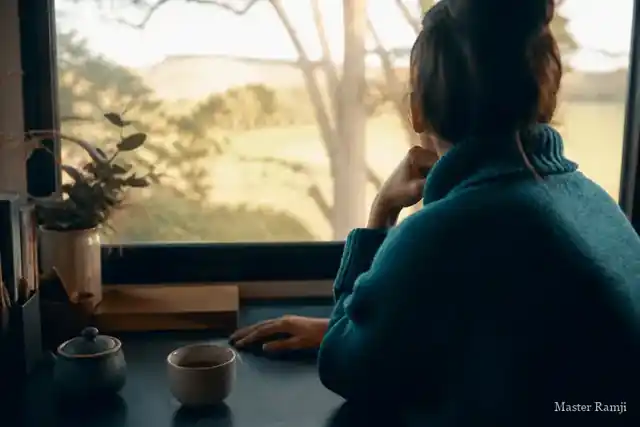
Palm lines are shallow, and a poor photo can hide most of them. You don't need special equipment, just a little care:
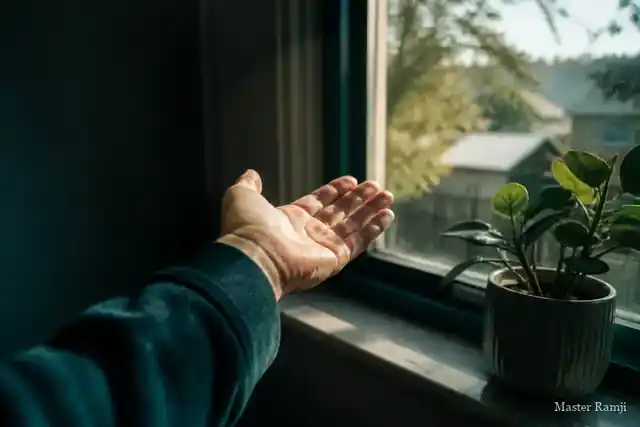
- Sit beside a window, so that soft daylight crosses your palm from one side.
- Turn off the flash and any portrait mode or beauty filter.
- Hold the phone flat, directly above a relaxed, slightly curved hand.
- Photograph both palms in full, from the wrist crease to the fingertips.
- Add a close-up of the centre of each palm and a side view of each hand.
- Check that the lines are sharp, then say which hand you write with.
Our article on how to photograph your palm for a reading has more on lighting and phone settings.
Before you send anything, crop out cards, mail and your face. Sharp close-ups can show fingerprint detail, so send them directly and don't post them publicly. The Office of the Australian Information Commissioner has general advice on protecting your personal information. What you share for a reading is kept confidential.
What happens in a session?
You will usually be asked what you would like to look at, such as work, relationships or simply an overview. The reader then goes through what can be seen, starting with the overall hand and moving to the lines. You may be asked about past events, and you should feel free to say when something doesn't fit. If a photo isn't clear enough, you may be asked for another one.
A good session is a conversation. You should hear what each feature is traditionally read for, and how sure anyone can reasonably be. Ask questions as you go. You don't need to accept any of it, and you don't have to act on any of it.
What can't a palm reading do?
It can't tell you when you will die, whether you will get sick, how many children you will have or how many times you will marry. Palm creases are physical features. MedlinePlus notes that the main creases form before birth, and that a single crease across the palm is often normal, though a clinician may look at it alongside other signs. That is a matter for a doctor, and no palmist can assess it.
Be wary of anyone who looks at your hand, announces something frightening and then offers a costly fix. That is a sales technique. Before you visit any palm reader, our article on fear-free questions to ask a palm reader is worth reading.
What does it cost?
Ask when you get in touch. Any fee is stated before paid work begins, so you can decide before sending your photos for a reading.
How do I get in touch?
Call or send a WhatsApp message to +61420977599, or use the contact form. Vijay Ramji is based in Ascot Vale, with appointments arranged in advance, and sessions can be held by phone, WhatsApp or video.
Common questions
Does a short life line mean a short life?
No. This is the best-known palmistry fear, and there is nothing behind it. The tradition itself reads this line for vitality and change, not for a date. Our article on what a short life line really means takes the myth apart.
Which hand gets read?
Both are worth sending, because traditions and readers differ. Many compare the hand you write with against the other one. Our guide to left and right hand reading explains how those choices are made.
Do my palm lines change over time?
Fine lines can look different over the years, while the main creases stay broadly stable. Our short answer on whether palm lines change gives more detail. A change in a line is not a sign that something bad is coming.
Do I need to know my birth time?
No. A palm reading uses your hands and doesn't need any birth details. That can make it a useful option if your time of birth was never recorded.
What if I have scars, mehndi or a skin condition?
Just mention it when you send your photos, so that nothing is mistaken for a line. Fresh mehndi can hide detail, so you may prefer to wait until it has faded. A new or changing skin problem is one for your GP.
Related services
Face Reading
Samudrika face reading explained: how this old Indian tradition reads facial features, how it can sit beside your chart, and why it should never judge anyone.
View service →
Numerology Reading
A numerology reading in Melbourne with Vijay Ramji: your birth number and destiny number read together, with plain talk on what the numbers can't tell you.
View service →Read more
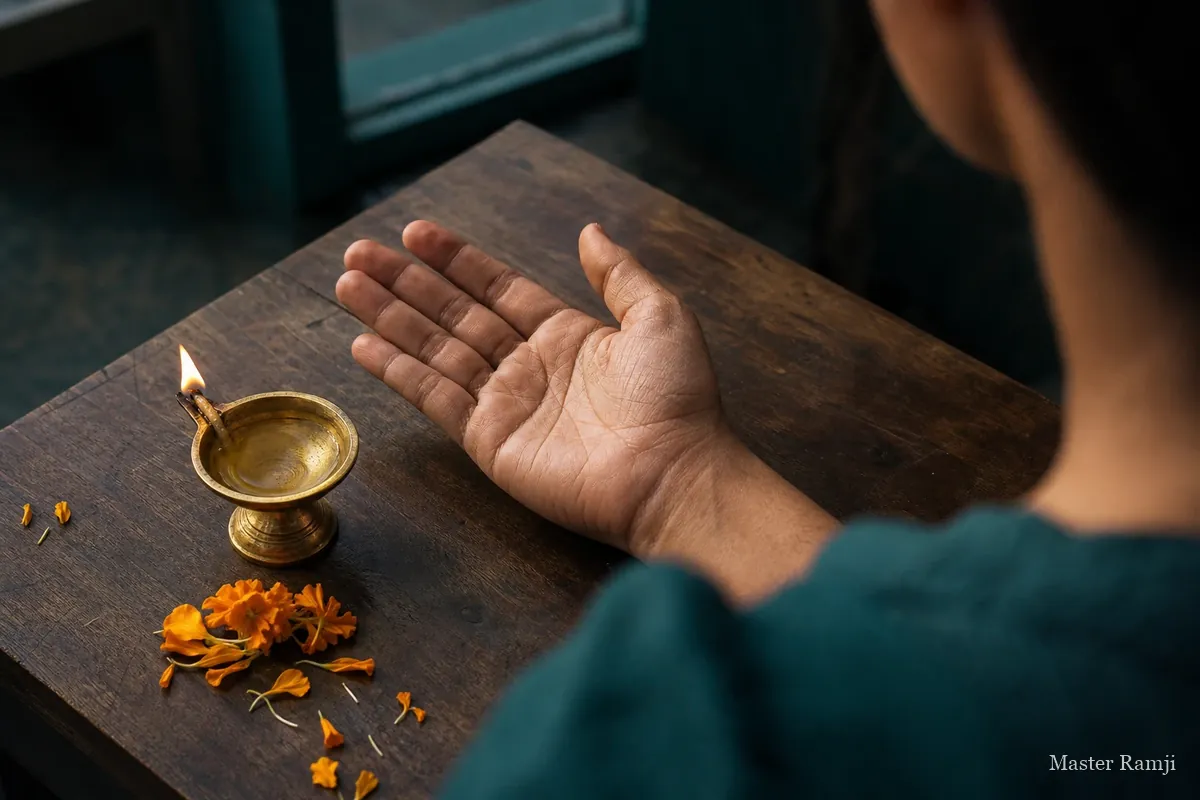
The Main Palm Lines and What They Are Read For
The meaning of palm lines in the palmistry tradition: what the life, head, heart and fate lines are read for, and why they can't predict your death or illness.
Read article →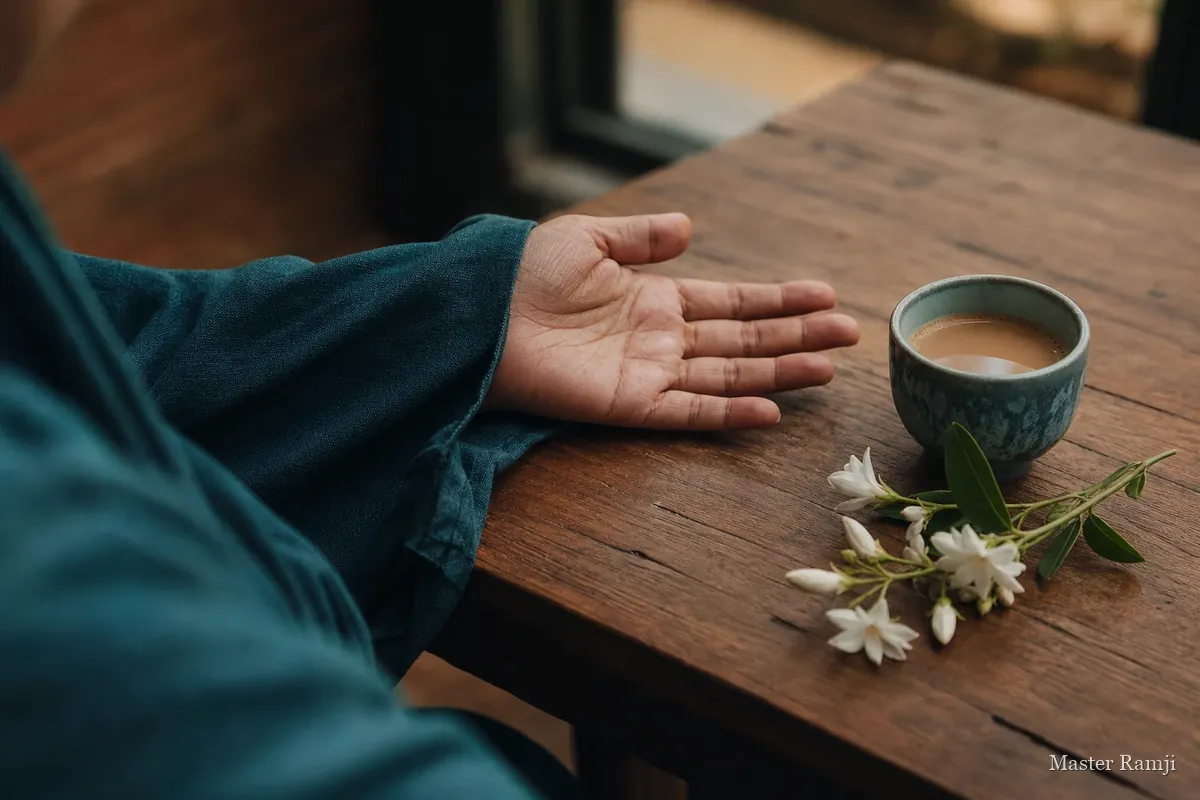
No a Short Life Line Does Not Mean a Short Life
A short life line does not mean a short life. What the tradition really says, what the few studies found, and what to do if a reader has frightened you.
Read article →Left or Right Hand: Which Is Read?
Which hand is read in palmistry? What Indian, Chinese and Western traditions say about left and right, how readers decide, and what left-handers should do.
Read article →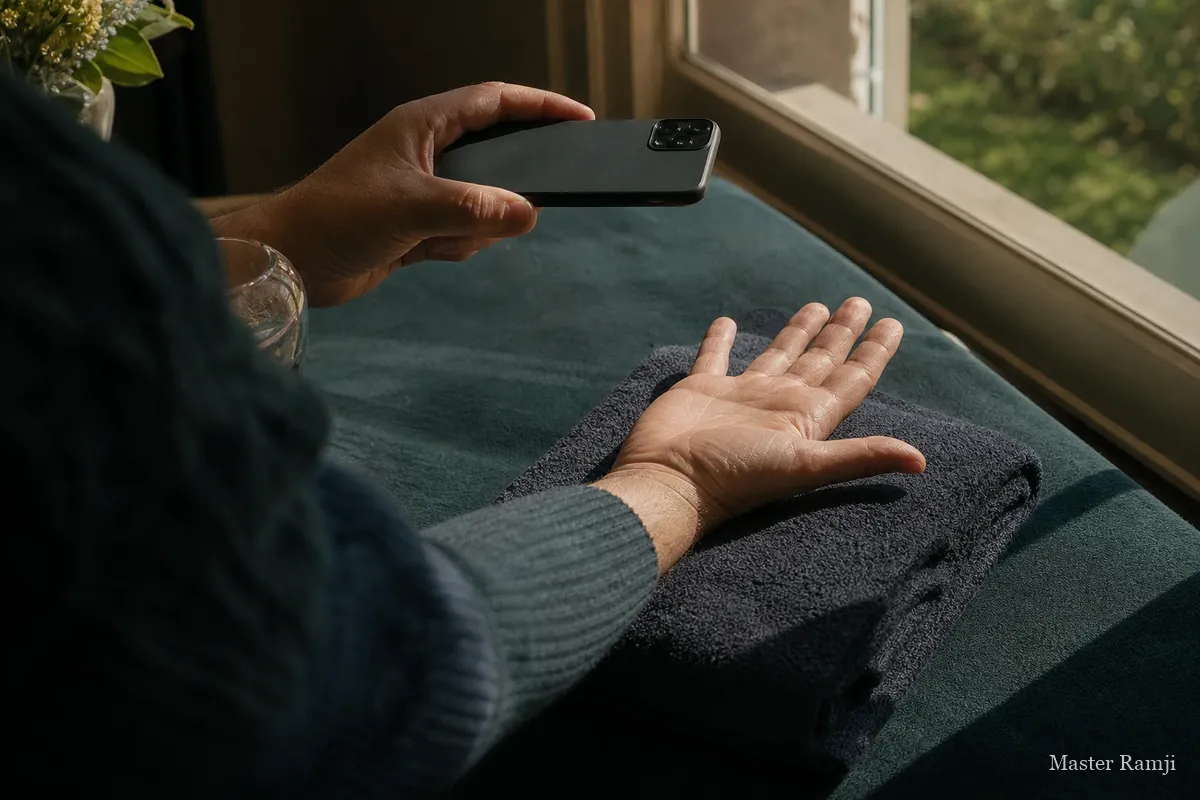
How to Photograph Your Palm for a Reading
How to take a palm photo for a reading: the right light and angle, which shots a reader needs, phone settings to change, and how to protect your privacy.
Read article →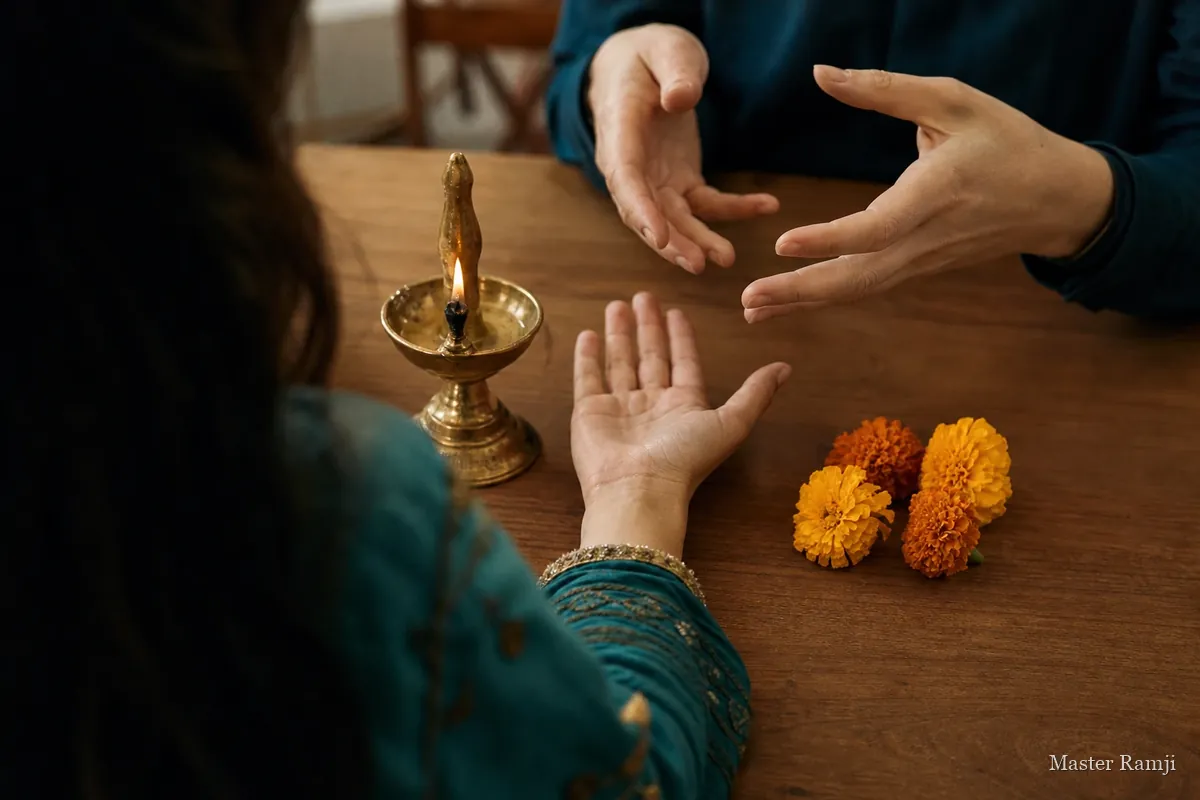
Thinking of a Palm Reader in Dandenong? Read This First
Thinking of seeing a palm reader in Dandenong? Calm, simple questions to ask before you offer your hand, what palmistry can't tell you, and your rights.
Read article →Quick answers
Do palm lines change over time?
The main palm creases form before birth and stay largely the same, while fine lines can shift with age and skin. Here is what that does and doesn't mean.
Read answer →What is the difference between a psychic and an astrologer?
An astrologer works from a chart calculated from birth details, while a psychic relies on intuition. Here is how that changes what each reading can offer.
Read answer →Where can I get a psychic or palm reading in Melbourne?
Psychic and palm readings are available in Ascot Vale, Melbourne, in person or by video. Here is how each works, how to send a palm photo, and the red flags to avoid.
Read answer →Talk to Vijay Ramji
Tell us what you are facing. If a reading is unlikely to help, you will be told that plainly.