
Left or Right Hand: Which Is Read?
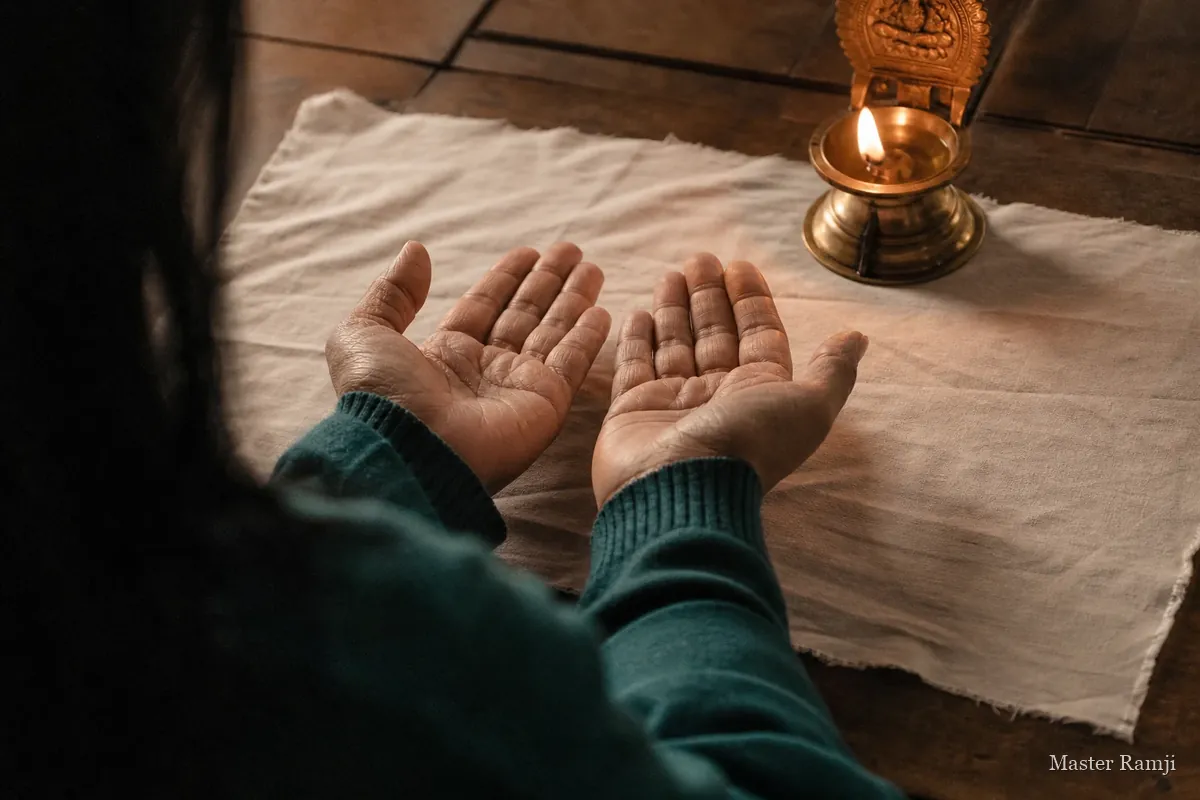
Which hand is read in palmistry depends on the tradition. Many modern readers look at both, treating the dominant hand as your present life and the other as your natural tendencies. Older customs read the right hand for men and the left for women, and some reverse this. None of these rules is proven.
It is often the first question at a reading, usually asked with one hand held out and a slight worry about choosing wrong. You may have been told one thing by your grandmother and another by a website. Both may be quoting a real custom.
There isn't one correct answer. There are several traditions, and they disagree. Here is what each says, how a reader usually decides, and what you should do if you are left-handed or have an injured hand.
Key takeaways
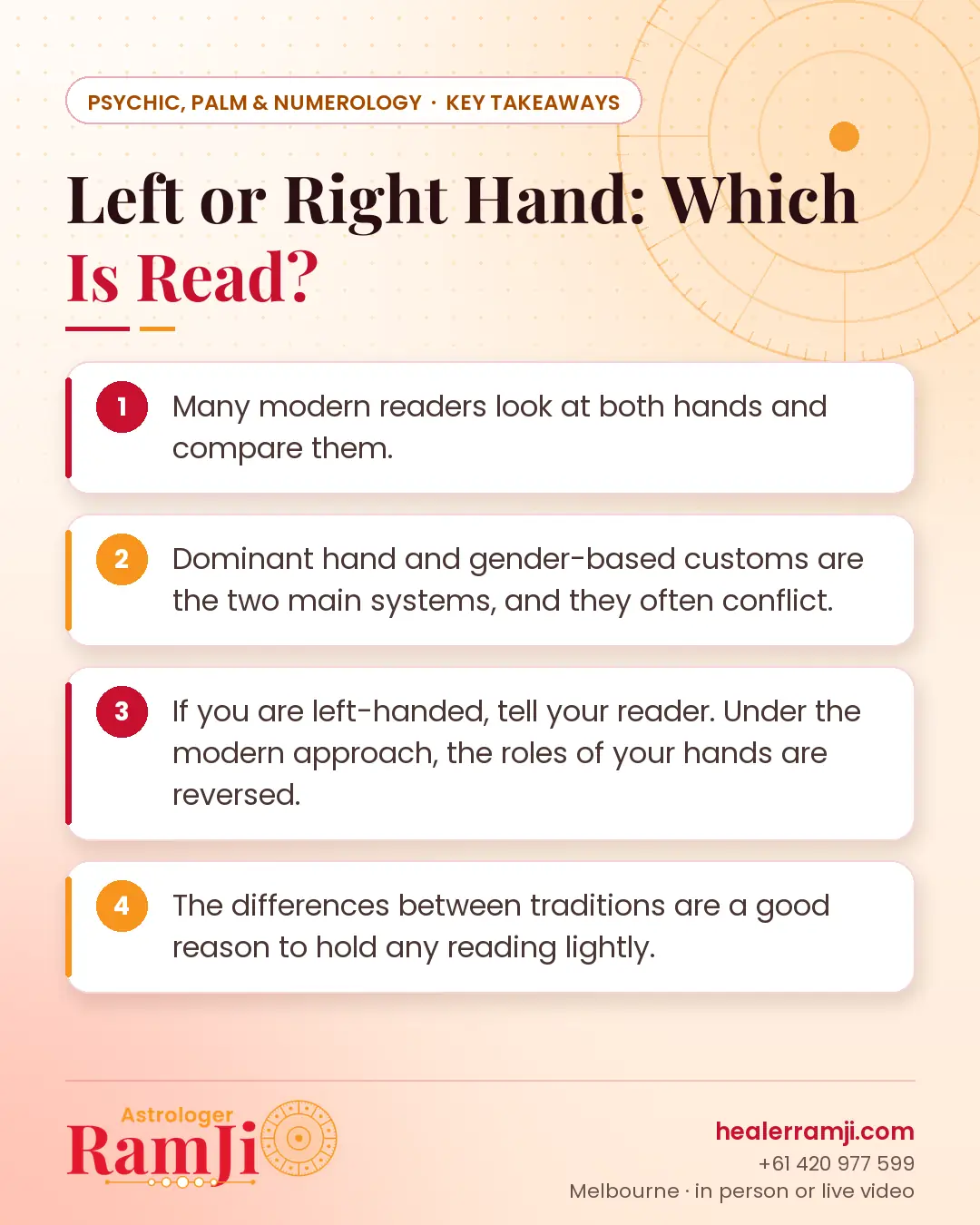
- Many modern readers look at both hands and compare them.
- Dominant hand and gender-based customs are the two main systems, and they often conflict.
- If you are left-handed, tell your reader. Under the modern approach, the roles of your hands are reversed.
- The differences between traditions are a good reason to hold any reading lightly.
What is the most common modern approach?
Many English-language palmistry books today start with handedness. The hand you write with is called the active or dominant hand. The other is the passive or non-dominant hand. They are typically read like this:
- Non-dominant hand. What you were born with, such as natural temperament and inherited tendencies.
- Dominant hand. What you have done with it, such as your habits, choices and current direction.
The appeal of this approach is that it leaves room for choice. A reader can compare the two hands and talk about where you have grown or moved away from your early pattern. It is an attractive idea, though it is an interpretation and not a finding about how hands work.
What do Indian and Chinese customs say?
You may have grown up hearing a rule based on gender. In many Indian families, the common saying is that the right hand is read for men and the left hand for women. Hand reading in India is linked with Samudrika Shastra, the wider study of bodily marks, and some readers there still follow this rule. Others, particularly in cities and overseas, have moved towards handedness or reading both. The same rule appears in medieval Jewish writing on palmistry, which took the right hand as decisive for men and the left for women.
A well-known Chinese saying has it the other way around: left for men and right for women. Modern readers in that tradition also vary, and some look at the dominant hand.
So the same palm could be read one way in Delhi and another way in Shanghai. As the history of palmistry shows, it developed in different forms across many cultures, with conflicting interpretations. That doesn't make your family's custom wrong as a custom. It simply means that no version can claim to be the only true one.
We would also question any idea that women's hands are read in a lesser way or that a woman's hand tells you mainly about marriage. That reflects older social attitudes more than anything in the hand.
How does a reader actually decide?
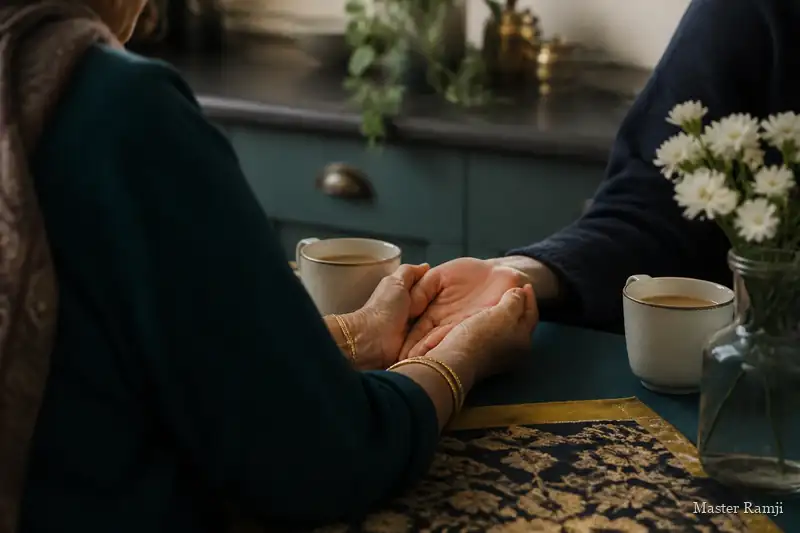
A careful reader will usually do something like this:
- Ask which hand you write and eat with. In some families, children were pushed to use their right hand, which affects the answer.
- Ask about your background. If you have been told something particular by your family, a reader can explain how they approach it.
- Look at both hands. This gives the fullest picture and takes the pressure off choosing.
- Note what they are using and why. A good reader tells you which method they follow, so you can weigh it for yourself.
If someone refuses to look at a hand on the grounds that the "wrong" one will bring bad luck, you can take that as a reason to be cautious. Nothing bad happens to you because someone looked at your other hand.
What if you are left-handed?
Under the handedness approach, your left is the active hand and your right shows your natural tendencies. Under a gender-based custom, the rule doesn't change for left-handers, so a left-handed man may have his right hand read first. Just tell your reader what you do, then let them explain what they are doing.
In India and in some other places, left-handed children have often been made to write with their right hand. If that was your experience, mention it. You may be mostly right-handed for writing but left-handed for everything else. Tell the reader which hand you actually reach for.
What if you use both hands, or one is injured?
If you are ambidextrous, a reader will usually treat both hands as active, or ask which you use for the most careful tasks.
Scars, burns, surgery, arthritis and skin conditions can all change how a hand's creases look. Mention these up front, so that they aren't read as signs of anything. A reader shouldn't treat a scar from a kitchen accident as a sign of destiny. If a hand has changed recently and you don't know why, see a GP. That is a question for medical care, not palmistry. We have also written about whether palm lines change over time.
What does it mean if your two hands look different?
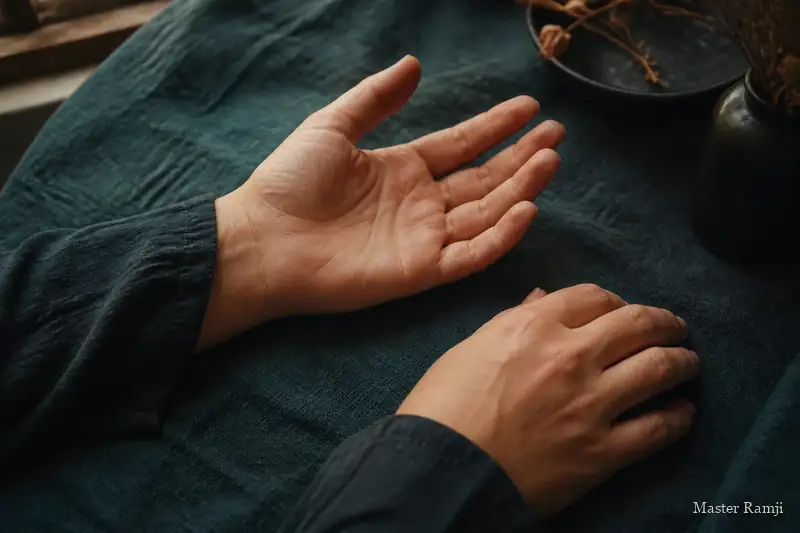
Most people's hands differ, sometimes noticeably. Lines may be longer on one hand, or a fate line may be clear on one and faint on the other. Readers often enjoy this, since it gives them something to talk about, and they may describe it as a shift between your nature and your choices.
You needn't worry about any of it. Some asymmetry is simply how bodies are built. A difference between hands doesn't mean you have gone wrong in life, and a clean-looking line on one side doesn't protect you from anything. For what each line is traditionally read for, see the main palm lines.
Which hand should you show or photograph?
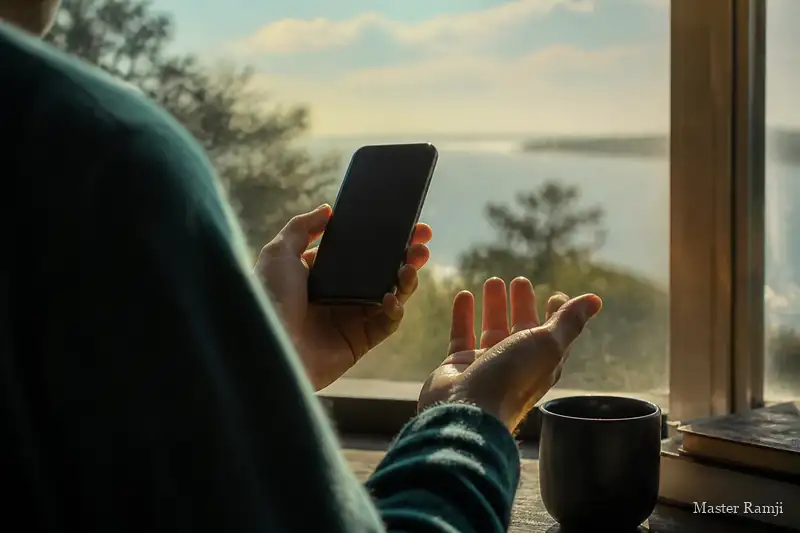
Show both. If a reader only wants one, they can still ignore the other. If your reading is by phone or video, send clear pictures of both palms and label them left and right, as a photo can be mirrored by a phone's front camera. Our guide on how to photograph your palm explains what a reader needs to see.
Does the choice of hand change what a reading can do?
No. Whichever hand is read, palmistry is a tradition and not a proven way to predict anything. It can't tell you when you will marry, whether you will get sick or what will happen with your finances. It can offer a chance to think about your temperament and your choices, and that is enough for many people. If you are curious about the wider tradition, see Samudrika Shastra: an introduction.
Our palm reading service can look at both hands from clear photos, with fees stated before paid work. Do ask which method we use. If you have a question about how it works, please get in touch.
Related service
Keep reading
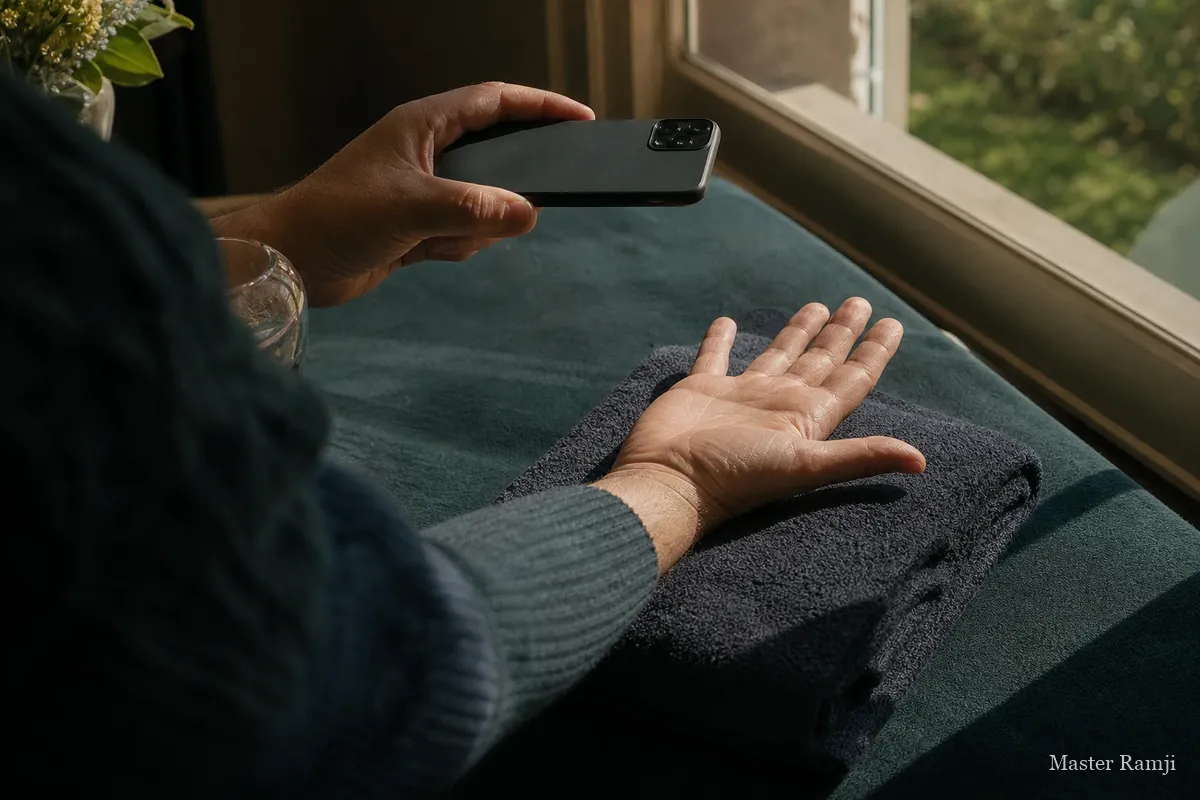
How to Photograph Your Palm for a Reading
How to take a palm photo for a reading: the right light and angle, which shots a reader needs, phone settings to change, and how to protect your privacy.
Read article →
Psychic or Astrologer: Which Do You Need?
Psychic or astrologer? A plain guide to how each method works, which questions suit which reading, and when neither is the right place to start.
Read article →
Psychic Reading Red Flags
The psychic scam red flags to take seriously: curse claims, rising fees and pressure tactics. What each looks like, what to say, and what to do if you have paid.
Read article →Quick answers
Do palm lines change over time?
The main palm creases form before birth and stay largely the same, while fine lines can shift with age and skin. Here is what that does and doesn't mean.
Read answer →What is the difference between a psychic and an astrologer?
An astrologer works from a chart calculated from birth details, while a psychic relies on intuition. Here is how that changes what each reading can offer.
Read answer →Talk to Vijay Ramji
Tell us what you are facing. If a reading is unlikely to help, you will be told that plainly.