
What is the evil eye?
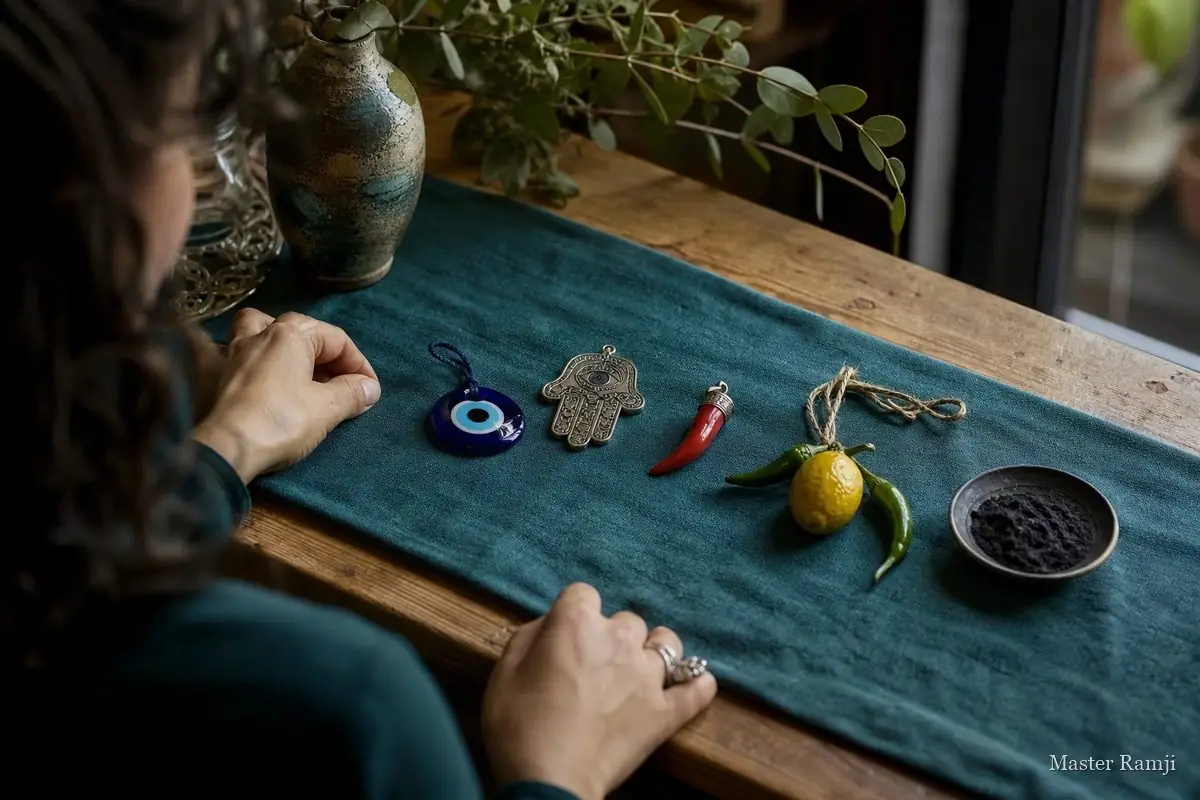
The evil eye is the old belief that an envious or admiring look can bring harm to a person, child or household, often without the onlooker meaning it. It appears in many cultures across Europe, West Asia, Africa, South Asia and Latin America. It is a belief, and no test can confirm it.
The evil eye goes by many names. In Hindi and Urdu it is nazar. In parts of South India you may hear drishti or kannu. In Turkey, many people know it through the blue eye bead.

Most responses are small and everyday:
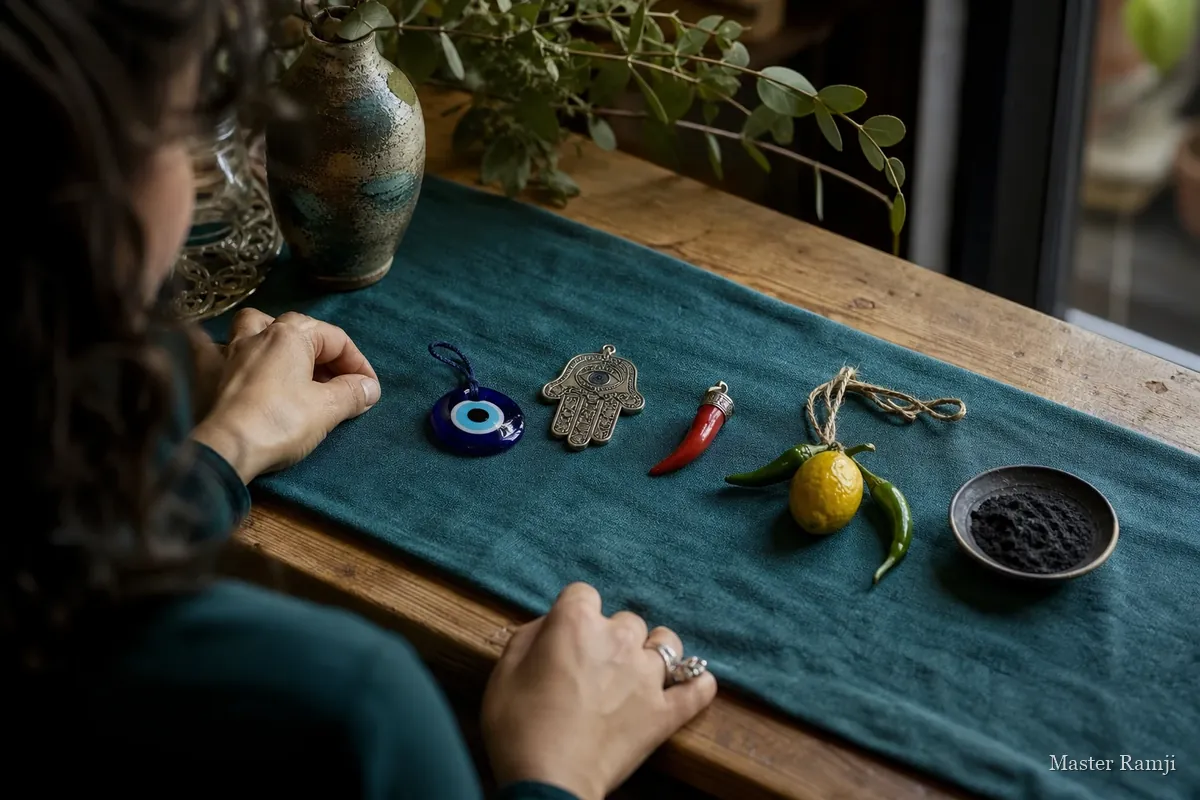
- wearing a charm, such as a blue bead or a hand-shaped hamsa
- adding a blessing to a compliment, as many Muslims do with "Masha'Allah"
- a home custom, such as nazar utarna, the salt and chilli rite

The limit is simple. Nobody has shown that a look can cause illness, money trouble or a bad year. A baby who won't feed, or an adult who is exhausted and unwell, needs a GP first, whatever else the family chooses to do. A custom can sit beside that care, but it shouldn't replace it.
The belief has a social side too. It can lead people to hide good news or grow suspicious of a friend or relative. If that starts to happen, it may help more to talk about the worry than to add another charm.
Our piece on evil eye beliefs across cultures traces the history. To see what traditional practice involves, and what it can't do, read about evil eye removal.
Related service

Read more
More quick answers
What is nazar utarna?
Nazar utarna is a household custom for removing the evil eye, usually with salt or chillies. Here is how it is done, and what to watch out for.
Read answer →How long does a home cleansing take?
There is no set time for a home cleansing. Here is what changes the length, what to ask before you book, and why open-ended courses are a warning sign.
Read answer →Talk to Vijay Ramji
Tell us what you are facing. If a reading is unlikely to help, you will be told that plainly.