
Why the First Years of Marriage Feel So Hard
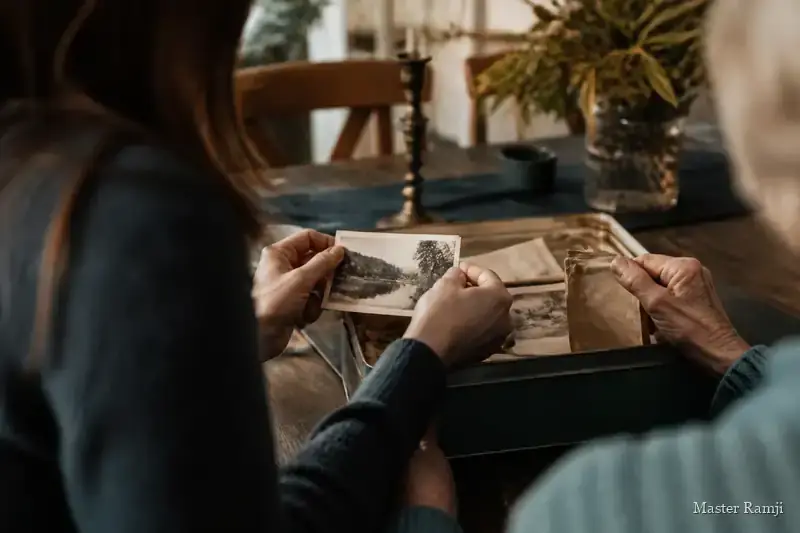
The first years of marriage are often hard because two people are merging habits, money, families and expectations at once, sometimes alongside a move, a visa or a new baby. Arguments, homesickness and doubt can be part of normal adjustment. Fear, control, humiliation or isolation are not, and they need support straight away.
Wedding photos rarely show the second year. The one where you argue about whose parents to visit, learn that your spouse leaves wet towels on the bed, and wonder quietly whether everyone else finds this easier. Many couples do find the start of marriage harder than they expected. Very few say so out loud.
This article sets out why the early years can be tough, which struggles are ordinary, and which signs mean something needs more than patience.
Key takeaways
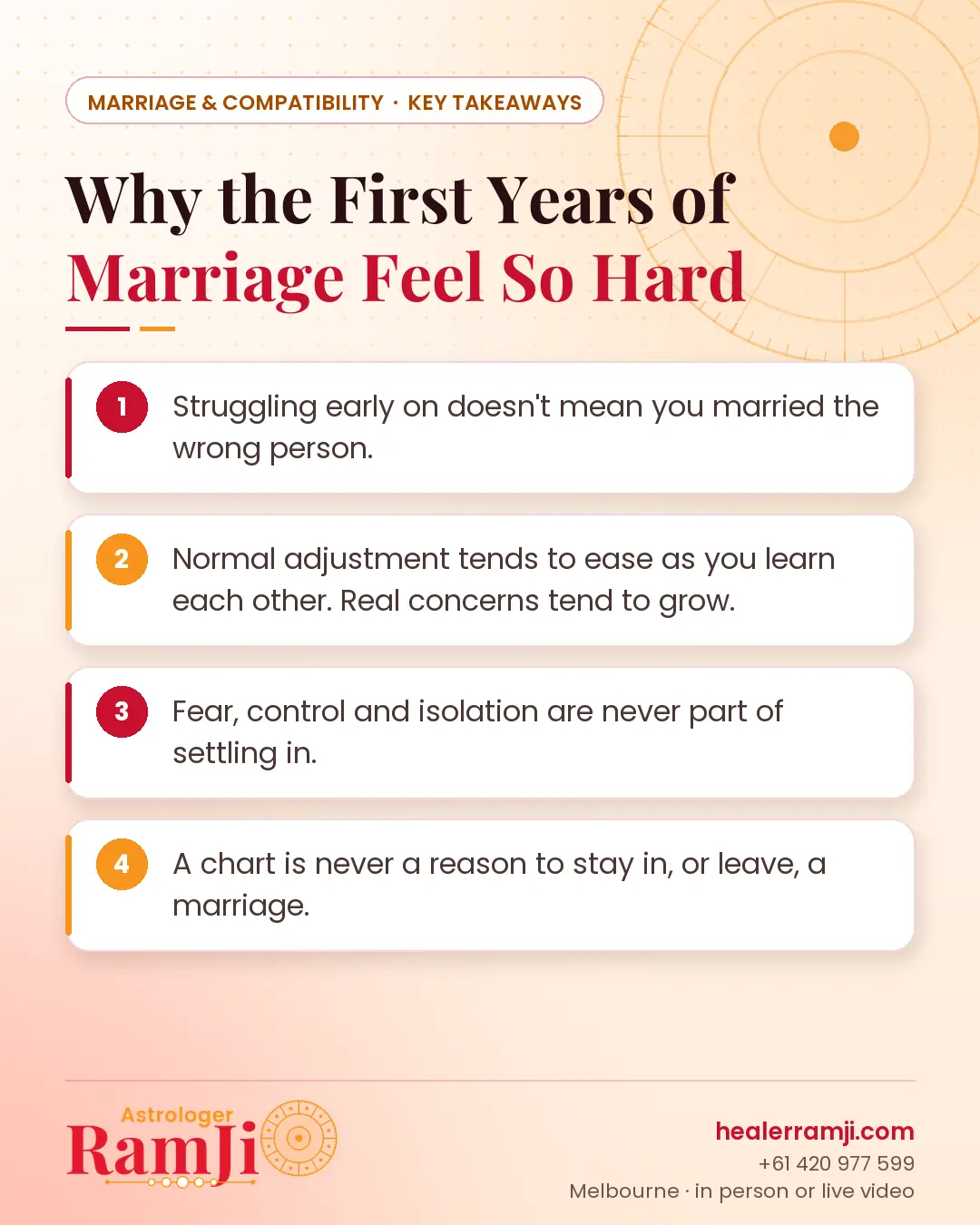
- Struggling early on doesn't mean you married the wrong person.
- Normal adjustment tends to ease as you learn each other. Real concerns tend to grow.
- Fear, control and isolation are never part of settling in.
- A chart is never a reason to stay in, or leave, a marriage.
Why are the first years of marriage so hard?
Because so many things change at once. In a short space of time, many couples are dealing with several of these together:
- Two households becoming one. Every habit, from cooking to cleaning to sleep, now needs a shared answer.
- Money. Different views on saving, spending and sending money to family can surface quickly.
- Families. Expectations about visits, festivals and decisions often arrive with the marriage, sometimes in the same house.
- Getting to know each other. In an arranged marriage, much of the knowing happens after the wedding, and that is a real task.
- A move. One partner may have left their country, friends and career to be here, and may feel lonely in a place their spouse calls home.
- New roles. A first baby, shift work or a new job can change the balance of a household almost overnight.
Any one of these takes time. Several together can make ordinary people feel like strangers for a while.
What does normal adjustment look like?
These struggles are common, and they usually ease as you learn how the other person works:
- Arguments about chores, money or time with family
- Feeling homesick, or missing the freedom you had when single
- Moments of doubt, especially after a hard week
- Needing more space, or more closeness, than your partner does
- Discovering that you handle stress or anger in very different ways
The Better Health Channel notes that conflict is a normal part of close relationships. It encourages couples to cool off when needed, come back to the issue, listen, and take responsibility for their own part. What matters is less whether you argue and more whether you can repair afterwards.

Which signs point to something more serious?
Some patterns are not part of settling in, however new the marriage is. Take these seriously:
- You feel afraid of your spouse, or change what you do to avoid their anger.
- Your partner controls your money, phone, movements or who you see.
- You are regularly insulted, mocked or blamed in front of others.
- There are demands for dowry, gifts or money from your family.
- You are threatened about your visa, your children or being sent away.
- You are pushed, hit, forced into sex, or threatened with harm.
If any of these sound familiar, this is not a rough patch to wait out, and it isn't caused by your stars or your family's luck. Call 1800RESPECT on 1800 737 732 at any hour, or 000 if you are in immediate danger. They can talk with you even if you aren't ready to do anything yet.
What about the space in between?
Many marriages sit somewhere in the middle. Nothing frightening is happening, but things aren't getting better either. Watch for:
- The same argument coming back every week without ever being settled
- Long silences, or one of you withdrawing for days
- Feeling more like flatmates than partners
- One of you seeming low, anxious or drinking more
These are good reasons to get help early, while you still both want to try. Relationships Australia Victoria offers counselling for couples, and a GP is a good first step if either of you feels low or overwhelmed. Our article on marriage counselling and astrology together explains why counselling usually comes first.

What helps couples through the early years?
None of these is magic, but they give the adjustment somewhere to happen:
- A weekly check-in. Ten calm minutes to ask what went well, what was hard, and what each of you needs next week.
- A plain money conversation. Write down income, debts, regular costs and money sent to family, and agree how decisions get made.
- Agreed limits with family. Decide together how often relatives visit and who speaks to whose parents when there is a problem. Our article on living with in-law tension goes further.
- Learning to argue well. Our guide to healthy conflict for couples covers taking breaks and repairing afterwards.
- A life for the newer arrival. If one partner has moved countries, their own friends, work or study matter. Being dependent on one person for everything puts strain on both.
Is a difficult start written in the chart?
Families sometimes reach for astrology when a new marriage struggles. You may hear that a Mangal dosha was missed, or that a hard planetary period began around the wedding. These are traditional ideas, and readers differ on how much weight to give them. They are not proof of anything.
A chart can offer a way to reflect on the season you are in. It can't tell you whether your spouse is faithful or whether you will stay together, and it is never an excuse for how someone treats you. Be wary of anyone who says your marriage will fail unless you pay for a ritual.
Where can a reading fit?
For a marriage under ordinary strain, some people find it helpful to talk with someone from within their own tradition, alongside counselling. Guidance for marriage difficulties looks at your chart and timing, asks first whether you feel safe at home, and turns the conversation towards practical next steps. It can't save a marriage or change your partner. If you would like to talk, get in touch.
Related service

Keep reading

Remarriage After Divorce in Indian Families
Remarriage after divorce in an Indian family: answering stigma, telling children of different ages, former in-laws, and the legal steps before a new wedding.
Read article →
Finding Partnership Again After Widowhood
Thinking about remarriage after widowhood? A gentle look at grief, guilt, family attitudes and adult children, with real support and honest limits.
Read article →
Marriage Remedies: What Is Worth Doing
Low-cost marriage remedies from astrology set against costly, pressured ones. What tradition suggests, what to avoid, and the warning signs of a remedy scam.
Read article →Quick answers
What is Mangal dosha?
Mangal dosha is a traditional marriage concern linked to the placement of Mars in a birth chart. Here is what it means and why it is rarely a reason to panic.
Read answer →What is Guna Milan?
Guna Milan is a traditional 36-point comparison of two people for marriage. See the eight factors it scores, what it leaves out, and how to read the result.
Read answer →Talk to Vijay Ramji
Tell us what you are facing. If a reading is unlikely to help, you will be told that plainly.