
Finding Partnership Again After Widowhood
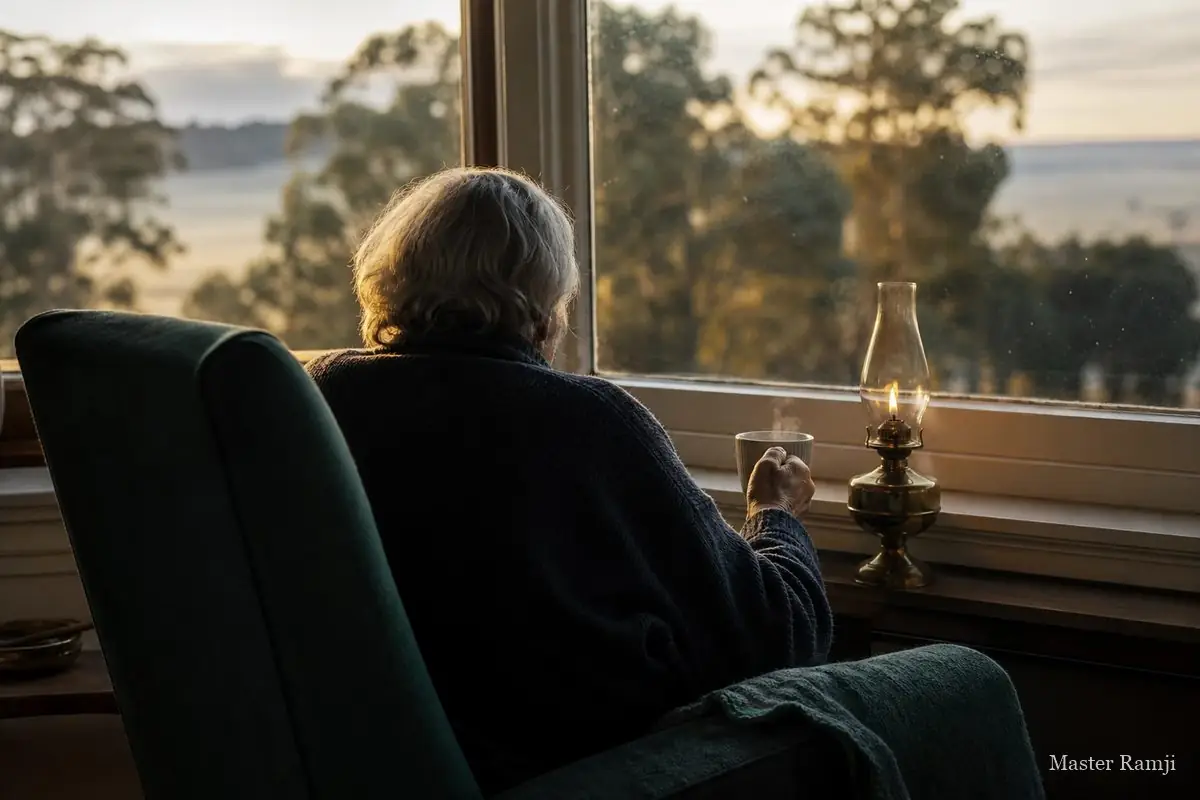
Remarriage after widowhood is a personal choice with no correct timetable. Guilt and grief often sit alongside new feelings, and that is normal. Talk honestly with adult children and in-laws, keep your late spouse's memory in your life, and get legal advice on wills and property. A chart can't decide when you're ready.
Some people never expect to want a partner again after their husband or wife dies. Then, months or years later, they find themselves enjoying someone's company and feel a rush of guilt. Others are pushed by relatives to remarry long before they are ready. Both experiences are common, and both deserve gentleness.
This page is for widows and widowers who are wondering about partnership or remarriage after widowhood, and for families trying to understand.
Key takeaways
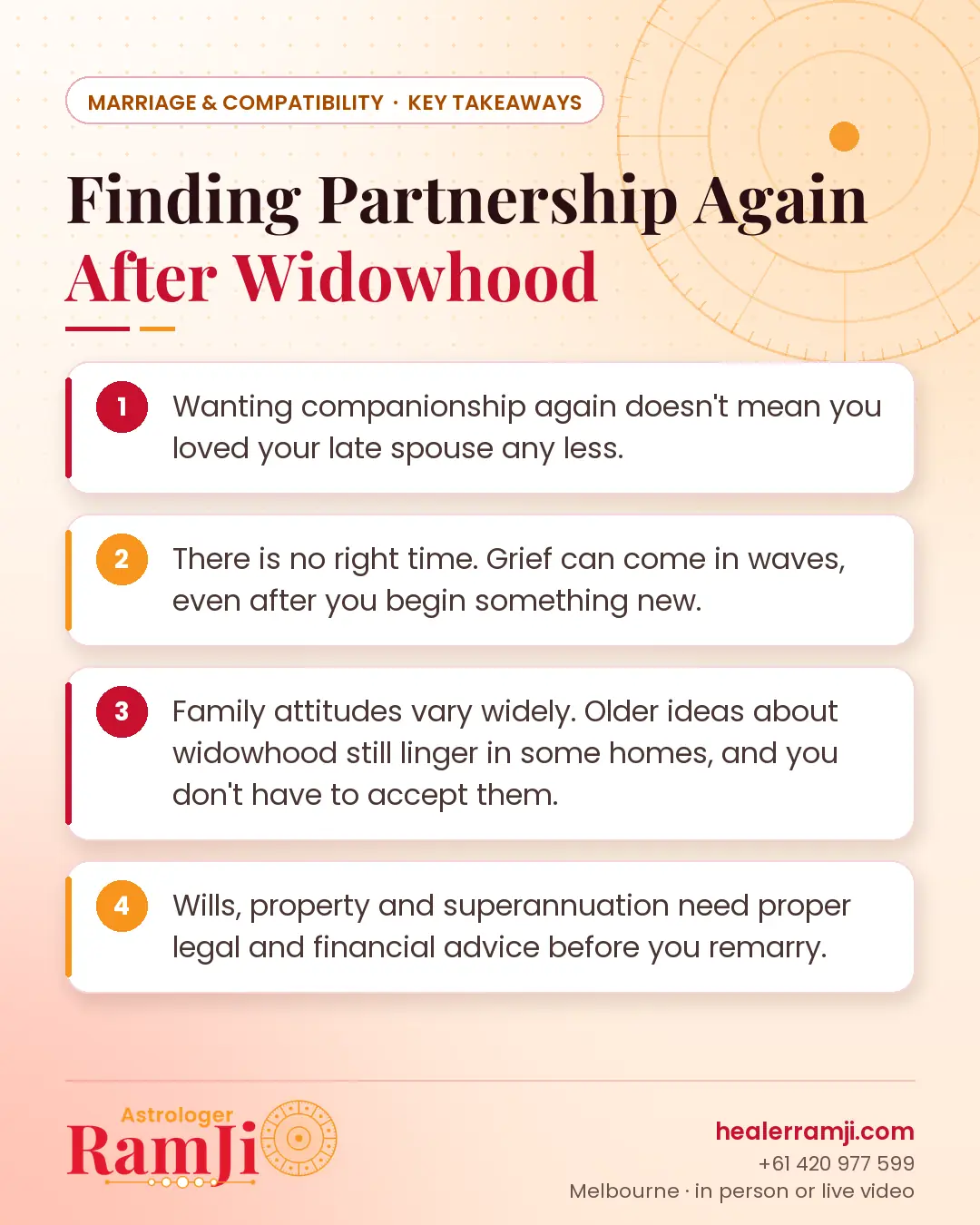
- Wanting companionship again doesn't mean you loved your late spouse any less.
- There is no right time. Grief can come in waves, even after you begin something new.
- Family attitudes vary widely. Older ideas about widowhood still linger in some homes, and you don't have to accept them.
- Wills, property and superannuation need proper legal and financial advice before you remarry.
Is it wrong to want a partner again?
No. Love for someone who has died doesn't need to end for new love to begin. Many people describe carrying their late spouse with them while building something different with someone new. The two relationships aren't in competition.
It may help to ask yourself a quiet question: am I moving towards this person, or mainly away from loneliness? Both feelings can be present. If loneliness is doing most of the work, it may be worth giving yourself more time, or finding other company first through friends, temple, community groups or volunteering.
Why does guilt show up, and what can you do with it?
healthdirect lists guilt among the feelings that can come with loss, alongside sadness, anger, relief and anxiety. It also notes that grief can fade for a while, then return. So you may feel fine on a date and heartbroken the next morning. That doesn't mean you made a mistake.
Some things that help people with guilt:
- Say it aloud. To a friend, a counsellor, or at your late spouse's photo. Guilt tends to shrink when it is spoken.
- Keep your rituals. Death anniversaries, shraddha and quiet prayers can continue. A new partner who respects them is worth a great deal.
- Ask what your spouse would want. Many people already know the answer.
- Notice anniversaries coming. healthdirect notes that birthdays and anniversaries can trigger intense grief. Plan for them, and tell a new partner why those days are hard.
How soon is too soon?
There is no rule, astrological or otherwise. Some people are ready in a year, some in ten, some never, and none of these is wrong. Signs that you may be ready include being able to talk about your late spouse without the conversation being only about loss, and wanting a partner for who they are rather than to fill a role.
healthdirect advises seeing your doctor if you are finding a major loss difficult to cope with. Grief that keeps getting in the way of sleep, work or eating is a good reason to book that visit. Griefline offers free, confidential grief support across Australia.
Why are some families uneasy about widow remarriage?
History plays a part. In parts of India, widows, especially young widows, were long expected to live in austerity. The Hindu Widows' Remarriage Act of 1856 made remarriage of Hindu widows legally valid in East India Company territories, after a campaign led by reformers including Ishwar Chandra Vidyasagar. Law changed faster than attitudes, and traces of the old stigma still surface in some families today.
In some families the pressure runs the other way. A widower may be urged to remarry quickly "for the children" or to have someone run the house, while a widow is discouraged altogether. Neither expectation should decide your life.
Some relatives also use cruel astrological language about widowhood, linking it to a dosha or to the surviving spouse's chart. A chart can't cause a death, and nothing shows your chart played any part. You can decline to discuss it.
How do you talk to adult children and in-laws?
Adult children often have mixed feelings. They may want you to be happy and still feel protective of their parent's memory. Some worry, without saying so, about the family home or inheritance. A few ideas:
- Tell them yourself, before they hear from others.
- Reassure them that their parent's place in the family isn't being erased. Photos stay up, anniversaries are still marked.
- Be open about practical plans once you have had advice, rather than leaving them to guess.
- Give them time to meet your partner without pressure to welcome them straight away.
Your late spouse's parents and siblings may feel a particular sense of loss. If you have been close, consider telling them privately and letting them know they remain family.
What practical steps come first?
Remarriage can affect your will, jointly owned property, superannuation nominations and any arrangements made after your spouse died. Before you remarry, ask a lawyer to review your will and a licensed financial adviser to look at the rest. If you are older and family members are involved in your finances or care, make sure decisions are truly your own.
Can astrology help?
A chart can't tell you when you will be ready, or whether a particular person is right for you. What a conversation can offer is space to talk through grief, guilt and family worries with someone outside the family, and a reflective look at timing if that matters to you. It doesn't replace grief counselling.
If your loss is still recent, spiritual support through grief may be a better starting point. Our short answer on what an astrologer can offer in grief explains the limits. When you are looking ahead, second marriage guidance looks at your chart again without stigma.
If grief ever feels unbearable, call Lifeline on 13 11 14 at any hour, or 000 in an emergency. Vijay Ramji is based in Ascot Vale, appointments are arranged in advance, and sessions can be held by phone, WhatsApp or video. What you share is confidential. Whenever you're ready, get in touch.
Related service

Keep reading
Marriage Remedies: What Is Worth Doing
Low-cost marriage remedies from astrology set against costly, pressured ones. What tradition suggests, what to avoid, and the warning signs of a remedy scam.
Read article →
Getting a Guna Milan Check Done Near Moonee Ponds
Your options for a guna milan check near Moonee Ponds, including family priests, nearby readers and video sessions, plus the details both partners should bring.
Read article →
Before the Wedding: A Checklist for South Morang Couples
Getting married from South Morang? A stage-by-stage checklist of legal paperwork, honest conversations, venue questions and spiritual tasks for the months before.
Read article →Quick answers
Does a birth chart show a second marriage?
A birth chart can't confirm a second marriage. Here is what astrologers look at, why they disagree, and what a chart can and cannot tell you about marrying again.
Read answer →What is Mangal dosha?
Mangal dosha is a traditional marriage concern linked to the placement of Mars in a birth chart. Here is what it means and why it is rarely a reason to panic.
Read answer →Talk to Vijay Ramji
Tell us what you are facing. If a reading is unlikely to help, you will be told that plainly.