
Choosing a Block in Truganina With Vastu in Mind
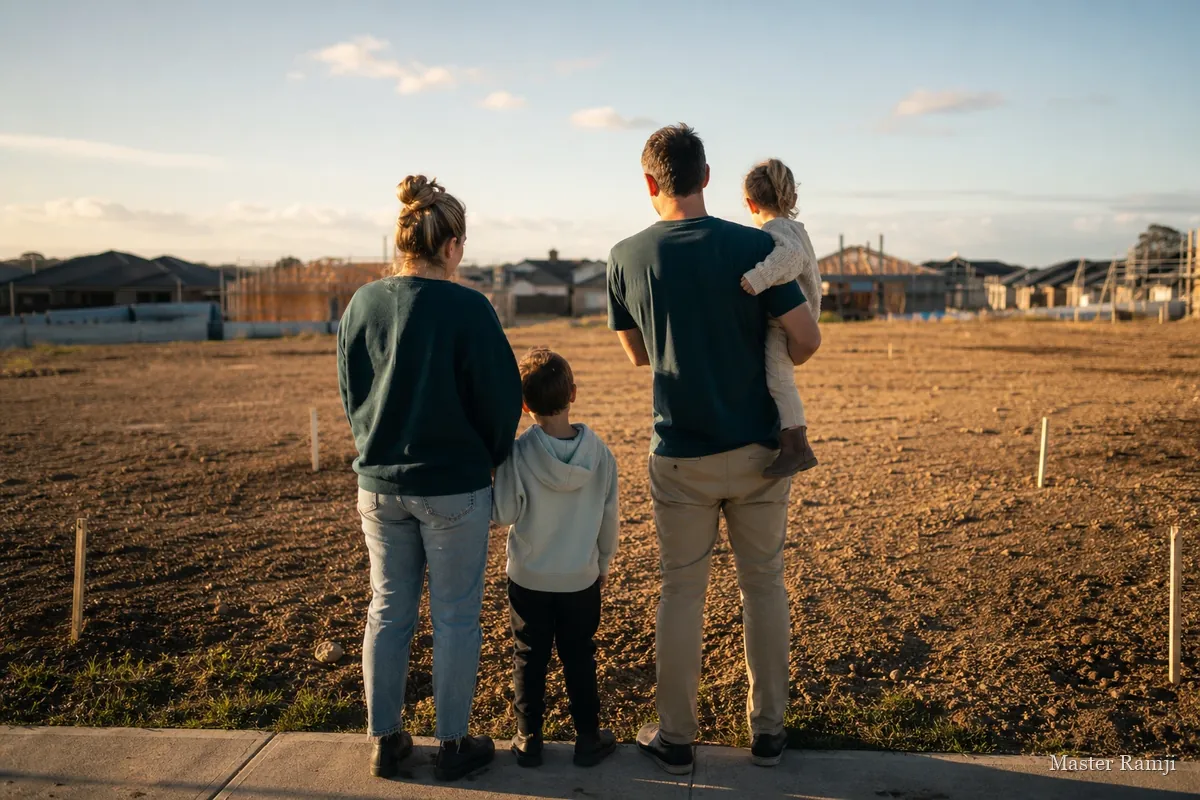
When weighing up a block in Truganina with vastu in mind, remember that you usually cannot change the road layout, lot shape or estate rules. Focus on what you can still choose: which lot, where the entry sits and how the rooms are arranged. Vastu is a tradition, so have a conveyancer check the contract first.
Truganina sits on the flat basalt plain west of Melbourne, on land first divided into large farm lots along a grid of roads. Much of what you see today was shaped by planning documents such as the Truganina Precinct Structure Plan, prepared with Wyndham City Council. So by the time you open a stage plan at a land sales office, the streets, parks and lot lines have largely been drawn.
That can feel frustrating if your family hopes to follow vastu shastra. Classical advice assumes you have some freedom over the site. On an estate plan, you are choosing from a set of options. This guide is about choosing well anyway.
Key takeaways
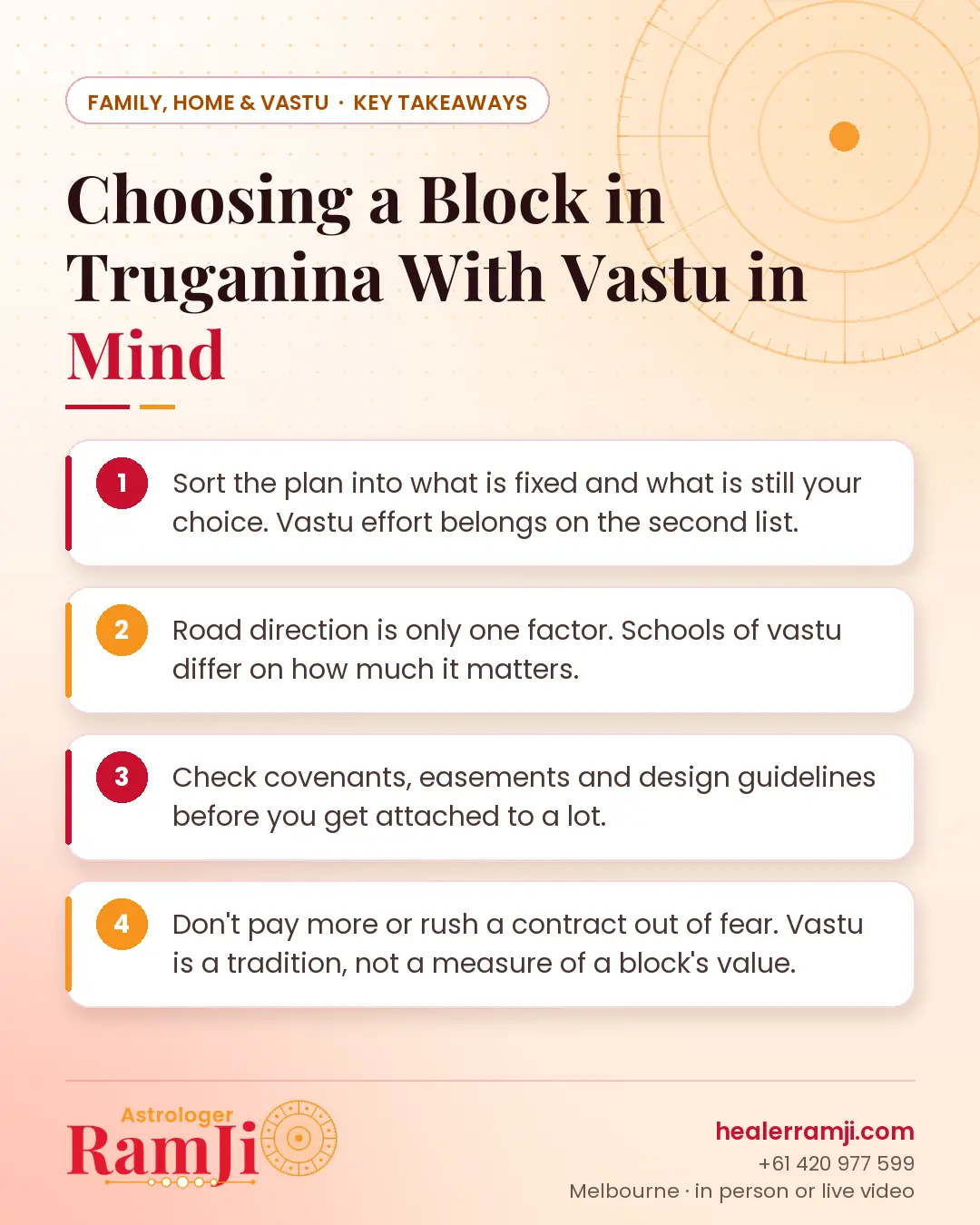
- Sort the plan into what is fixed and what is still your choice. Vastu effort belongs on the second list.
- Road direction is only one factor. Schools of vastu differ on how much it matters.
- Check covenants, easements and design guidelines before you get attached to a lot.
- Don't pay more or rush a contract out of fear. Vastu is a tradition, not a measure of a block's value.
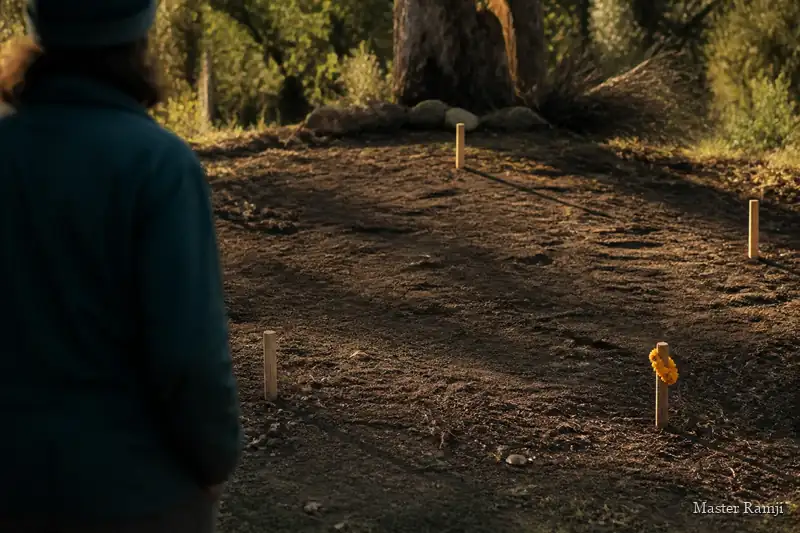
What is already fixed on a Truganina estate plan?
Assume you can't change any of these once the plan is set:
- The street pattern. It decides which way each lot faces.
- The lot's shape and size. Corner lots and lots on curved streets may be wedge-shaped or irregular.
- Easements. These are rights over part of the land, often for services, and they can limit where you build.
- Covenants and design guidelines. These may control things like fencing, façades and setbacks.
Consumer Affairs Victoria's due diligence checklist is a good place to begin. It explains that restrictions on a title can stop you from developing land as planned, and points you to the section 32 statement, the council and a lawyer or conveyancer.
One local trap is worth checking. Truganina is split between two councils. The southern part is in Wyndham and the northern part is in Melton. Find out which one covers your lot before you ask any planning questions.
What does vastu traditionally look for in a block?
Texts and practitioners vary, but these ideas come up often:
- Shape. Square or rectangular blocks are usually preferred over irregular ones.
- Corners. A missing north-east corner is often treated as a concern. A block extended towards the north-east is often seen more favourably.
- Direction. Many families prefer a block facing north or east.
- Level. The north-east is traditionally kept lower and more open, and the south-west higher and heavier.
- Road position. A street running straight at the block, as at a T-junction, is commonly discouraged.
These are beliefs, handed down through tradition, and nobody has shown that they change what happens to a household. They are also debated. Some practitioners place more weight on where the entry falls along a wall than on the block's direction overall. Read whether a south-facing home is bad in vastu before you rule out a lot on that basis. There is also an open question about whether vastu changes in the southern hemisphere.
How do you read the plan with vastu in mind?
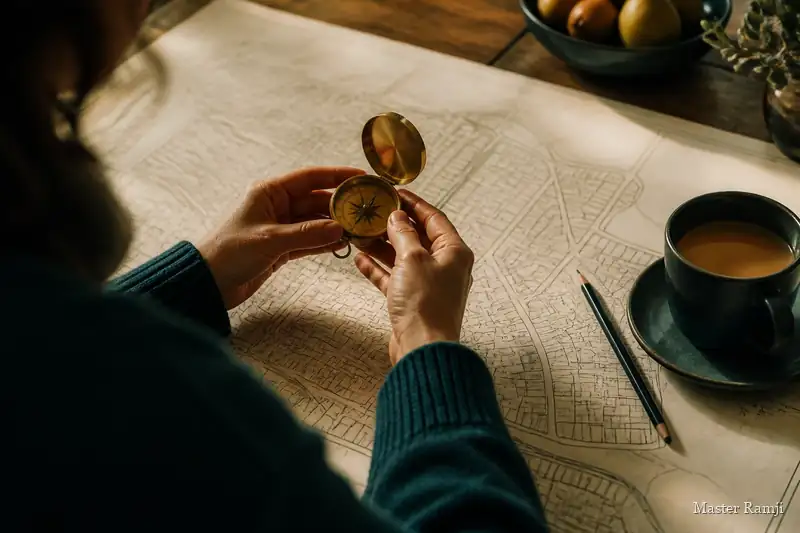
Take the plan home if you can, and work through it slowly:
- Find the north point. Streets on estate plans often run at an angle, so don't assume that the top of the page is north.
- Note how each lot faces. A compass reading on a bare block is useful, but the plan's north point comes first.
- Trace the lot's outline. Mark any cut or extended corners, and any angled boundary.
- Mark the easements. See which part of the lot they cover, and what that does to your building area.
- Look along the street. Is there a road running directly at the lot? Is the lot opposite a park, or a future shop?
- Shortlist two or three lots. One perfect lot is a recipe for pressure. Several good ones give you room to think.
Remember that a drawing isn't the finished estate. Ask what the plan shows as future stages or future uses, and have your conveyancer check whether the plan of subdivision is registered yet.
What if the sun and vastu point in different directions?
This comes up often in Melbourne. In the southern hemisphere the sun sits to the north, so many buyers want their main living areas and backyard facing north. That can make a block with a south-facing street front appealing, as the backyard gets the sun.
A family following a common reading of vastu might prefer the opposite, with the road and main entry on the north or east. You may have to weigh the two. A block's comfort, power bills and winter light are practical, everyday matters. Vastu preference is about what feels right to you and your family. Neither is automatically the winner. Ask your builder or energy assessor about the first, and decide for yourselves how much the second matters.
What can you still change after choosing?
Often more than you would think. Even on a fixed lot, you may have some say over:
- The floor plan. Many builders can mirror a design, which may change where the kitchen and main bedroom fall.
- The entry. Its position along the front wall may have some flexibility, within the design guidelines.
- Room placement. A puja room in the north-east, or a kitchen in the south-east, can sometimes be worked into a standard plan.
- The garden. Where you keep open space, trees and any water feature is largely up to you, subject to any rules.
Get any changes confirmed in writing by your builder, and checked against the estate's guidelines. If timing matters to your family as well as layout, griha pravesh and home buying timing covers that part. A vastu consultation for your home can go through your shortlisted lots or draft floor plan, and should tell you plainly where it can't help.
Do nearby uses matter?
Some are worth a look, for practical reasons as much as traditional ones. Parts of Truganina hold large logistics and industrial sites. Think about truck routes and noise. Skeleton Creek and Dohertys Creek also run along parts of the area, so ask about any flood overlay on a lot near them.
Truganina Cemetery on Woods Road dates back to 1865. Some families would rather not live right beside a cemetery, and others don't mind at all. That is a matter of personal comfort. Please don't let anyone tell you it will bring harm to your home.
What if the best vastu lot isn't the right lot?
Then buy the right lot. Your budget, title, commute and schools are real, and they will shape your life far more directly. No vastu feature can make a contract safer or a mortgage smaller. For open-home buying later on, our vastu checklist for open inspections is a handy companion.
Be wary of a sales deadline, and just as wary of a consultant who says a lot will bring disaster. Have your conveyancer or lawyer read everything before you sign. Vastu can guide your preferences, but it can't stand in for that advice.
You can read more about our work in Melbourne's western suburbs. If you would like a second opinion on a shortlist, get in touch.
Related service
Keep reading
Vastu in Ascot Vale's Period Homes
Boom-era brick and weatherboard homes in Ascot Vale rarely match a vastu textbook. How to work with a period layout without harming its heritage fabric.
Read article →
Vastu for Box Hill High-Rise Apartments
In a Box Hill tower you rarely choose which way you face. What vastu can still offer on a high floor, how to compare apartments, and what to leave alone.
Read article →
Griha Pravesh in Point Cook: Planning Around Settlement
Planning griha pravesh in Point Cook? How to fit the rite between settlement day, keys and the removalists, without letting a muhurat run your contract.
Read article →More from Melbourne's Western Suburbs
Griha Pravesh in Point Cook: Planning Around Settlement
Planning griha pravesh in Point Cook? How to fit the rite between settlement day, keys and the removalists, without letting a muhurat run your contract.
Read article →
Finding Your Spiritual Community in Wyndham
Living in Tarneit, Point Cook or Werribee? How to find a Hindu spiritual community in Wyndham, keep up your practice, and get support when you feel alone.
Read article →
Planning Hindu Last Rites From Melbourne's West
A gentle guide for families around Werribee after a death: who to call first, Victorian certificates and cremation paperwork, and questions about Hindu rites.
Read article →Local pages
Astrologer for Footscray
Live in Footscray? Vijay Ramji is based in Ascot Vale, with sessions by phone, WhatsApp or video. Questions that fit apartments, study, shops and mixed families.
View area →
Astrologer for Sunshine
In Sunshine, Victoria? Vijay Ramji is based in Ascot Vale, with sessions by phone, WhatsApp or video. Questions about older homes, changing work and family.
View area →Astrologer for Werribee
Live in Werribee? Vijay Ramji is based in Ascot Vale, with kundli readings by phone, WhatsApp or video. Questions for long-settled families and new arrivals.
View area →Quick answers
What is vastu shastra?
Vastu shastra is a traditional Hindu system of home and building design based on direction and layout. Here is what it covers and what it can't claim.
Read answer →Can vastu be applied in a rental?
Yes, vastu can be applied in a rental if you stick to reversible changes. Here is what to try first and what Victorian renters should check.
Read answer →Talk to Vijay Ramji
Tell us what you are facing. If a reading is unlikely to help, you will be told that plainly.