
Buying a Gemstone: Certificates and Fair Prices
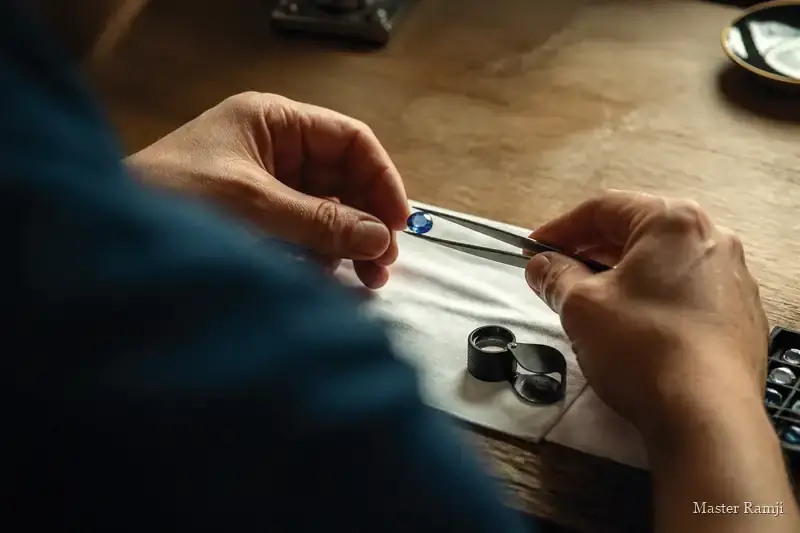
A gemstone certificate is only useful if it comes from an independent laboratory, can be verified directly with that lab, and matches the stone in your hand. Read the identification, natural or synthetic status, treatment comments and carat weight. Compare like with like on price, and keep everything in writing in case the stone isn't as described.
A gemstone recommended for astrological reasons often arrives with a certificate, sometimes laminated, sometimes with a hologram and a photo. It looks official, and that is the point. Whether a gemstone certificate tells you anything useful depends on who issued it, what it says and whether it belongs to the stone you are buying.
This guide is for anyone about to spend real money on a stone. It explains how to read the paperwork and what drives a fair price. It doesn't recommend one laboratory over another.
Key takeaways
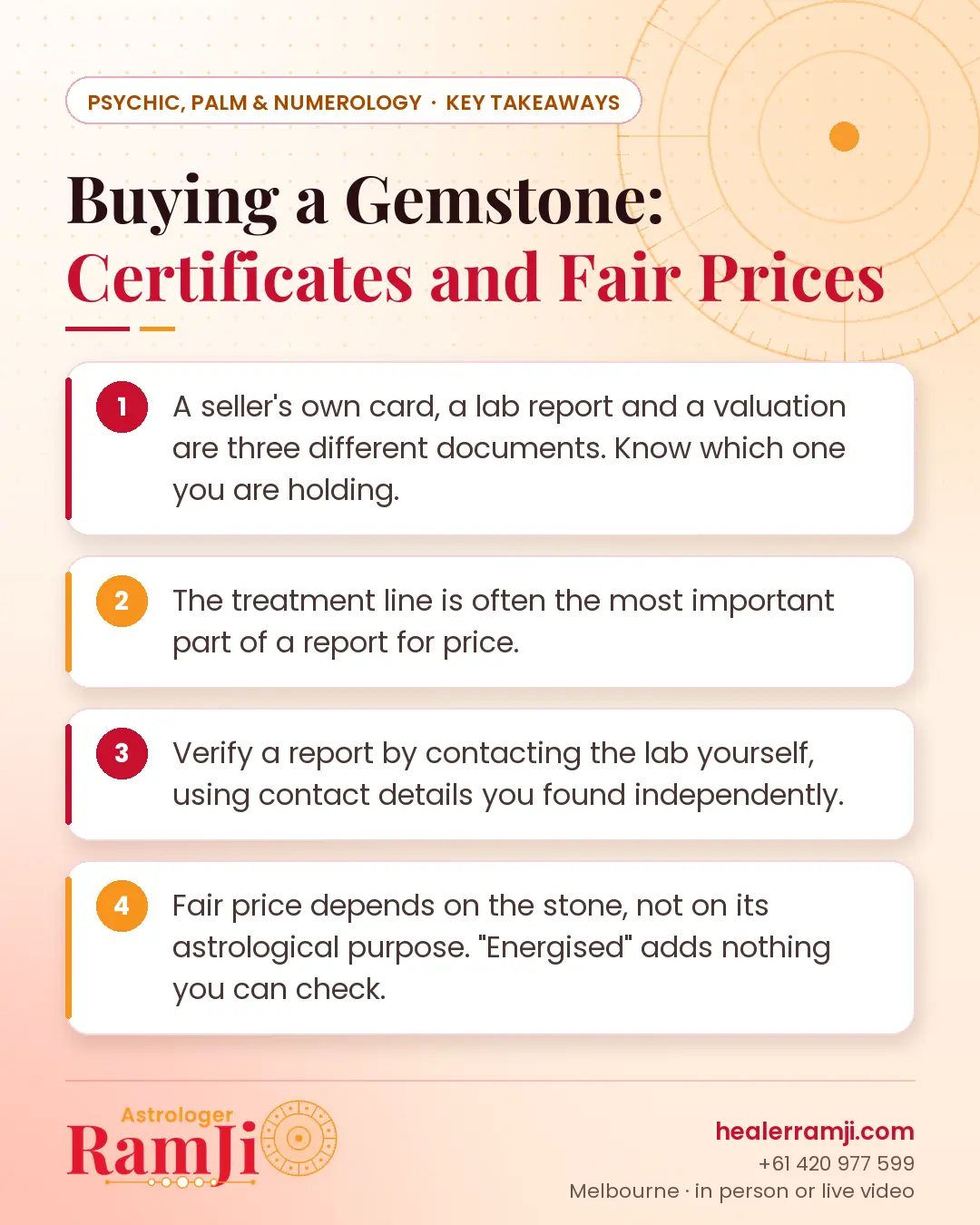
- A seller's own card, a lab report and a valuation are three different documents. Know which one you are holding.
- The treatment line is often the most important part of a report for price.
- Verify a report by contacting the lab yourself, using contact details you found independently.
- Fair price depends on the stone, not on its astrological purpose. "Energised" adds nothing you can check.
Which document are you actually holding?
People use "certificate" for several very different papers:
- A seller's card or warranty. Written by the shop. It is a description and a promise, not an independent test.
- A laboratory report. Issued by a gem testing laboratory after examining the stone. It describes what the stone is. It doesn't usually put a price on it.
- A valuation. Written by a valuer, often for insurance. It gives a dollar figure. An insurance valuation may be well above what you could sell the stone for, so it doesn't prove you got a bargain.
- An "energising" or "blessing" certificate. A statement about a ritual. It says nothing about the stone and can't be checked.
How do you read a lab report line by line?
Layouts vary, but most reports contain the same core details. Here is what each line tells you:
- Report number and date. You will need both to verify it.
- Identification. The species and variety, such as corundum, variety sapphire. This tells you what the stone is, regardless of its trade name.
- Natural or synthetic. Lab-grown stones are real gems with the same chemistry, but they are priced very differently. Imitations, such as glass, are not the gem at all.
- Treatment comments. Look closely here. The GIA's ruby buying guide says most ruby has been heated, that some stones have fractures filled with lead glass, and that glass-filled or diffused rubies are worth less than heated ones. It advises asking for treatment information in writing. "No indications of heating" and "heated" can mean a large price difference.
- Weight in carats. This should be the loose stone's weight.
- Measurements and shape. Length, width and depth in millimetres, plus the cut.
- Colour and other observations. Descriptions vary between labs.
- Origin opinion, if any. Some reports give a geographical origin. It is an opinion, often offered at extra cost, and it can strongly affect price.
- Photo. Helpful, but photos of similar stones can look alike.
How do you check that the report belongs to the stone?
A genuine report for a different stone is a common trick. Before paying:
- Ask for the stone to be weighed in front of you, unset, and compare the weight with the report.
- Compare the measurements. A small gauge or a ruler will show an obvious mismatch.
- If the stone is already set, ask why, and consider an independent check before you buy.
- An independent gemmologist or valuer who isn't connected to the sale can confirm the stone matches its paperwork.
How do you verify a report?
Find the laboratory's website or phone number yourself, through a search, not from the certificate. Some labs offer an online lookup by report number. Others will confirm by email or phone. If you can't find the laboratory at all, or it shares an address or name with the shop, treat the report as a seller's document.
Be wary of reports that carry no date, give a vague identification such as "natural gemstone", or list a weight in ratti only.
Why does the weight unit matter?
Astrological recommendations are often given in ratti, a traditional unit. The trouble is that ratti isn't one fixed measure. Gem sellers commonly use a ratti of about 0.91 carats, but an older convention is smaller, so the same "five ratti" can describe noticeably different stones. Ask for the weight in carats, and do any conversion yourself.
What makes a price fair?
There is no list price for a planet's stone. A fair price reflects the stone itself:
- What it is, and whether it is natural, lab-grown or imitation
- Whether and how it has been treated
- Size, colour, clarity and cut quality
- Any documented origin claim
To compare prices fairly, line up stones with the same identification, treatment status and similar weight. Ask each seller to put the price in writing on a receipt that also names the stone and its treatment. A stone is worth the same whether or not it is sold as an astrological remedy, so any extra charge for "energising" or a "muhurat setting" is a premium you can't verify or resell.
What are your rights if the stone isn't as described?
Consumer Affairs Victoria explains that products bought from Australian businesses must match their description. If a product is significantly different from its description, you can choose a refund or replacement, or keep it and claim compensation for the drop in value. There is no right to return something simply because you changed your mind. That is why the written description on your receipt matters so much.
Buying online from overseas is riskier, because Australian protections may be hard to enforce. If you suspect you have been scammed, keep every record and report it to Scamwatch.
Do you need a stone at all?
Often the honest answer is no. A gemstone consultation looks at whether the tradition calls for a stone in your chart, and may end with none. Gemstones have no proven effect on health, money or relationships. If you've been pushed to buy quickly, read what to do when told to buy a costly gemstone. For questions to ask at the counter, see questions for a local jeweller, and for lower-cost options, affordable substitute gemstones.
Vijay Ramji is based in Ascot Vale, appointments are arranged in advance, and sessions can be held by phone, WhatsApp or video. Fees are stated before paid work, and no stone needs to be bought. For a second view before you spend, get in touch.
Related service
Keep reading
Blue Sapphire: Why So Much Caution?
Blue sapphire carries more astrology warnings than any other gem. Where the neelam disaster stories come from, why they are folklore, and a sensible way to decide.
Read article →
Affordable Substitute Gemstones
Substitute gemstones in astrology, known as uparatna, are cheaper stones linked to the same planets. What they are, how the lists differ, and what to check.
Read article →
Remedies That Do Not Need a Gemstone
Astrology remedies without gemstones: why many traditions favour mantra, charity and daily discipline, a planet-by-planet guide, and how to keep one up.
Read article →Quick answers
Which gemstone should I wear?
Which gemstone suits you depends on your chart and tradition, and the honest answer may be none. Here is how the choice is made and what to check first.
Read answer →Can I wear a gemstone without a reading?
You can wear any gemstone without consulting an astrologer if it's simply jewellery. Here is the traditional caution, and how to avoid overpaying.
Read answer →Talk to Vijay Ramji
Tell us what you are facing. If a reading is unlikely to help, you will be told that plainly.