
When In-Laws Stay for Months in Mill Park

When in-laws stay long term in Mill Park, protect the marriage first. Agree as a couple on house rules, roles and the length of the visit before they arrive, and keep regular time for just the two of you. Respect should flow both ways. If anyone is threatened, controlled or hurt, contact Safe Steps or 1800RESPECT.
Mill Park is a settled family suburb in Melbourne's north. Victorian Places places it about 18 km north-east of the city, between the Darebin Creek and the Plenty River, with Westfield Plenty Valley just inside its northern edge and an RMIT campus at its southern border. Plenty of homes here have a spare room, and plenty of families use it for parents visiting from overseas.
A long visit can be a real joy. Grandparents get to know the children, someone helps with cooking, and the house feels full. But three or six months under one roof is different from a two-week holiday. This article is about keeping your marriage strong while in-laws are staying with you for the long haul.
Key takeaways
- Talk as a couple before the visit, and agree on the basics together.
- Each partner usually handles their own parents when something needs to be said.
- Protect small, regular time for just the two of you.
- Tension is normal. Threats, control or harm are not, and help is available.
Why do long visits strain a marriage?
Most of the strain comes from roles, not people. When parents arrive, an adult child can slip back into being a son or daughter first and a spouse second. The other partner may suddenly feel like a guest in their own home, especially if they're the daughter-in-law or son-in-law expected to cook, host and stay cheerful after work.
Different expectations add pressure. One family may see a months-long stay as normal and loving. The other may feel it as a loss of privacy. Neither view is wrong, but if a couple never talks about it, each partner can end up quietly resenting the other.
What should you agree on before they arrive?
A calm conversation at the kitchen table, weeks before the flight, saves a lot of trouble later. Cover:
- The length of the stay. A clear return date, or at least a review point, helps everyone.
- Household roles. Who cooks, who cleans, who does school pick-ups, and who decides about the children's routines.
- Money. Who pays for what, including outings, medical costs and travel insurance.
- Privacy. Which rooms and times are just for the two of you.
- Visas and health cover. Visa conditions and length of stay are set by the Department of Home Affairs, so check them directly, not through friends.
Keep the agreement simple and flexible. It's a shared plan, not a contract to wave at anyone.

Who speaks up when something isn't working?
As a general rule, each partner talks to their own parents. A son raising a concern with his mother usually lands more gently than a daughter-in-law doing the same, and it keeps the spouse from becoming the villain. Talk privately first, as a couple, then decide who will say what.
If you're the partner whose parents are visiting, notice how often your spouse is giving way. Backing your spouse in small moments, such as a meal choice or a parenting call, tells everyone that the marriage still comes first.
Try to raise one issue at a time, without an audience. "Mum, we'd like the children in bed by eight on school nights" is easier to hear than a list of complaints after a long day.
How can you keep time for the marriage?
Small, regular moments matter more than big gestures. A walk along one of the local reserves after dinner, a coffee before work, or a weekly night out while the grandparents babysit can all keep you connected. If you share a faith practice, a few quiet minutes of prayer together can help too.
Visiting parents need their own life as well. Long days alone in a quiet suburb can leave them bored and lonely, which often turns into more friction at home. The Mill Park Library on Plenty Road has collections in languages including Hindi and Punjabi, plus social connection groups and technology help sessions. Helping your parents find something of their own gives everyone a bit of space.

What if tension turns into something more serious?
Arguments, sulking and the odd raised voice are part of many shared households. But Victoria has a broad legal definition of family violence, and Victoria Police lists parents-in-law and extended family among the relationships where it can happen. It isn't only physical. It can include threats, constant put-downs, controlling your money, taking documents, or cutting you off from friends. It can also run the other way, with older parents who depend on their children being mistreated.
If anyone in the house is being hurt, threatened or controlled, Safe Steps offers confidential family violence support across Victoria at any hour. 1800RESPECT on 1800 737 732 is another confidential option. If someone is in danger right now, call 000.
Can astrology help with in-law tension?
Some couples find it helpful to talk about family patterns with someone who understands their culture. In Vedic astrology, family and home are linked with certain houses of the chart, though astrologers read these in different ways and none of it is proven. A conversation built around a chart can open up questions about duty, boundaries and expectations that are hard to raise directly.
Our guidance for marriage difficulties and family harmony guidance work this way. Both partners should agree to any joint session, and no one's chart should be read without their consent. Be wary of anyone who offers rituals to make an in-law obey, leave or change. Our answer on why controlling rituals are unethical explains why. For ongoing conflict, a relationship counsellor is often the most useful step.
If you live in Mill Park, sessions can be held by phone, WhatsApp or video, which can be easier to arrange privately when the house is full. Fees are stated before any paid work, and what you share stays confidential. You can read about our work in Melbourne's northern suburbs, or get in touch when the time is right.
Related service
Keep reading
Planning a Hindu Wedding in Melbourne's South-East
Booking a hall in Dandenong, Casey or nearby for a Hindu wedding? The sacred fire questions to ask, the hire rules to read, and the marriage paperwork to lodge.
Read article →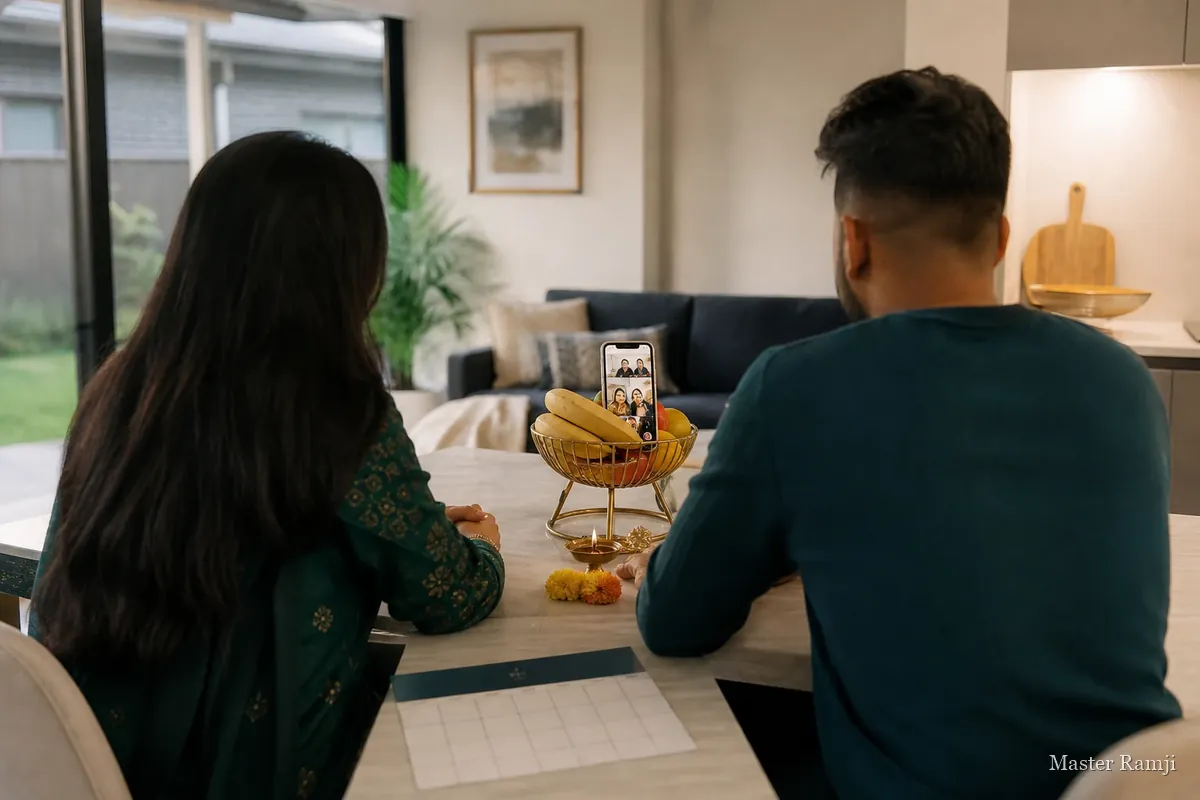
Picking a Wedding Date From Tarneit With Family in India
Marrying in Melbourne with parents and grandparents in India? How Tarneit couples can balance a muhurat with visitor visas, work leave and the long flight.
Read article →
The Money Talk for Engaged Couples in Point Cook
Engaged in Point Cook? How to have the money talk before marriage: mortgages, money sent to family overseas, wedding costs, and where to get proper advice.
Read article →More from Melbourne's Northern Suburbs
A Saturn Period With a Mortgage: Advice for South Morang
Feeling squeezed during a Saturn period with a mortgage in South Morang? What the tradition says, practical steps for a slow stretch, and where to get real help.
Read article →
Your First Kundli Reading if You Live in Roxburgh Park
Booking a first kundli reading from Roxburgh Park? How a phone or video session works, what details to prepare, and how to set up a quiet space at home.
Read article →
Chakra Claims in Coburg Yoga Studios: A Reality Check
Chakras often come up in yoga and wellness classes. How to tell old tradition from modern marketing in Coburg, and which claims deserve a second look.
Read article →Local pages

Quick answers
What is Mangal dosha?
Mangal dosha is a traditional marriage concern linked to the placement of Mars in a birth chart. Here is what it means and why it is rarely a reason to panic.
Read answer →What is Guna Milan?
Guna Milan is a traditional 36-point comparison of two people for marriage. See the eight factors it scores, what it leaves out, and how to read the result.
Read answer →Talk to Vijay Ramji
Tell us what you are facing. If a reading is unlikely to help, you will be told that plainly.