
Vastu and Timing for a Small Office in Moonee Ponds
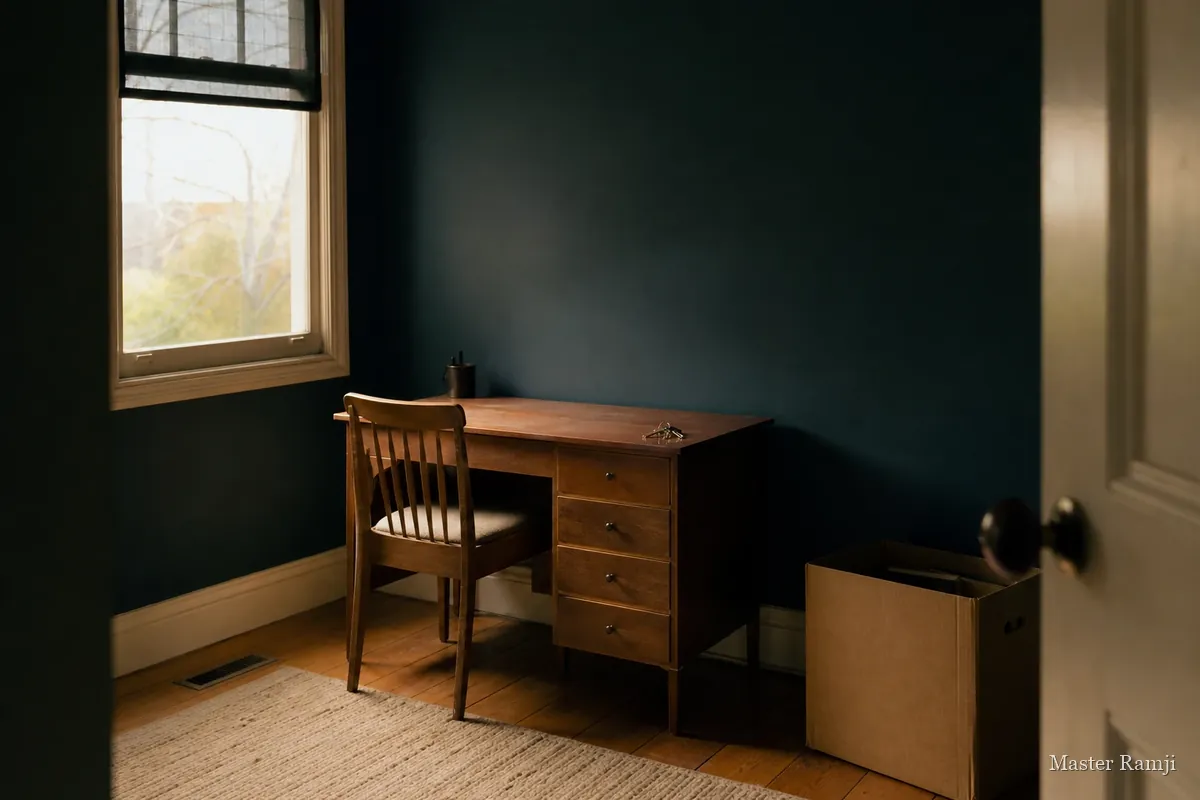
For a small office in Moonee Ponds, start with the lease and council rules, then use vastu only for what you control: desk position, light, clutter and a clear entry. If timing matters to you, choose a quiet opening moment using muhurta. Neither tradition can promise clients or income.
A small office in Moonee Ponds rarely starts with a ribbon-cutting. It might be two rooms upstairs from a shop on Puckle Street, or a suite off Mount Alexander Road. You collect the keys, carry in a desk, and that's the opening. The walls belong to someone else.
Most vastu and business muhurat advice assumes you own the premises and will hold a big event. This guide is for the other case: a leased suite and a low-key start. The tradition can still offer some structure, as long as it stays behind the lease, the council and your business plan.
Key takeaways
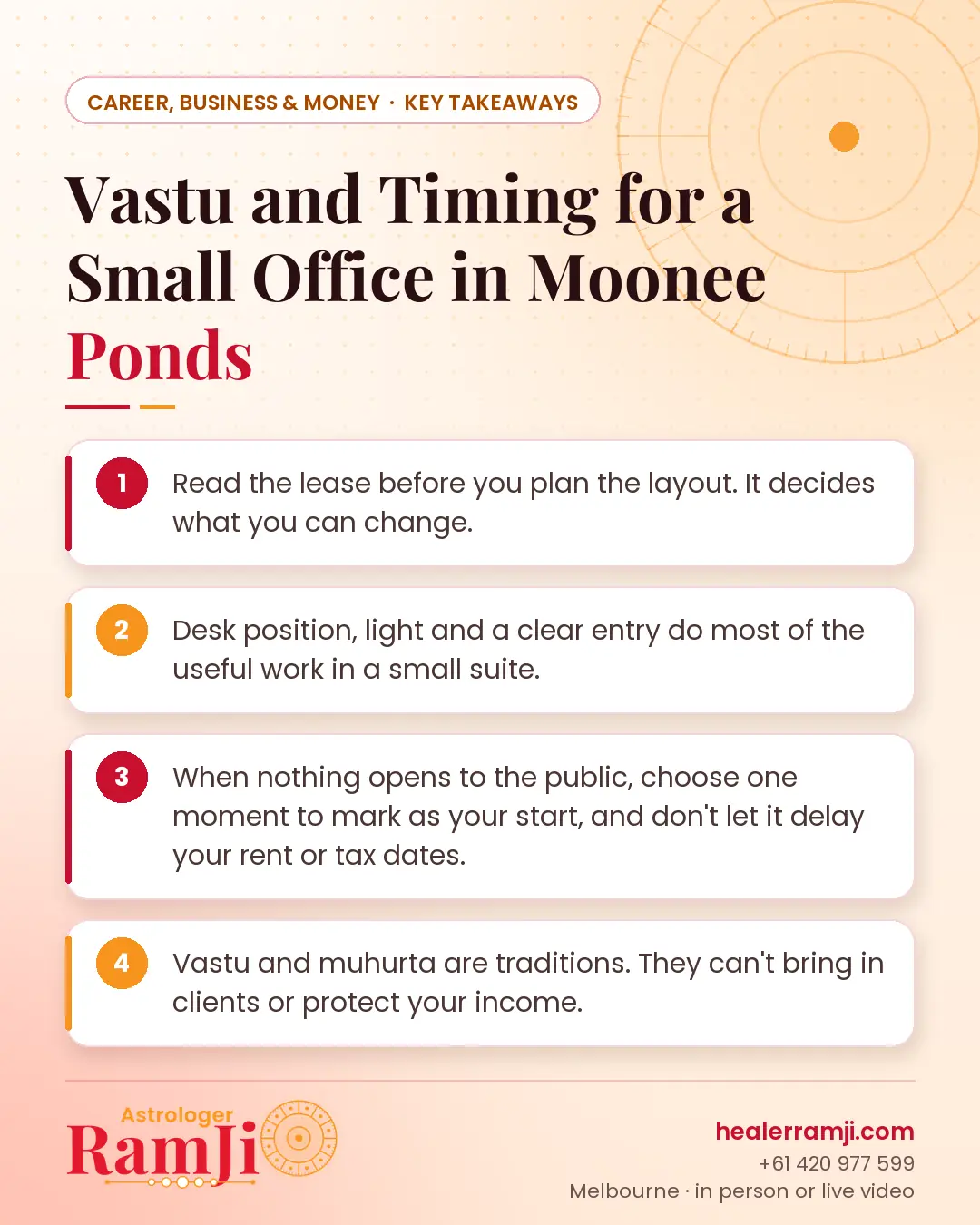
- Read the lease before you plan the layout. It decides what you can change.
- Desk position, light and a clear entry do most of the useful work in a small suite.
- When nothing opens to the public, choose one moment to mark as your start, and don't let it delay your rent or tax dates.
- Vastu and muhurta are traditions. They can't bring in clients or protect your income.
What should you check before you think about vastu?
Start with the paperwork. Ask a lawyer to read the lease before you sign. Pay particular attention to:
- Permitted use. Does the lease allow what you plan to do there, including seeing clients?
- Alterations and fixtures. Can you paint, fix shelves or move a partition? What needs written consent?
- Make-good terms. You may have to return the suite to its earlier condition when you leave.
- Signage and shared areas. The foyer and stairs probably aren't yours to decorate.
Don't assume which lease law applies, either. The Victorian Small Business Commission says retail premises are those used wholly or predominantly for retail goods or services, and it notes that supplying commercial services to other businesses can count. So some offices may be covered by the Retail Leases Act, and others won't be. If the Act applies, a landlord must give you a disclosure statement at least 14 days before you enter the lease. The Commission or your lawyer can help you work out where you stand.
Does Moonee Ponds' heritage affect your suite?
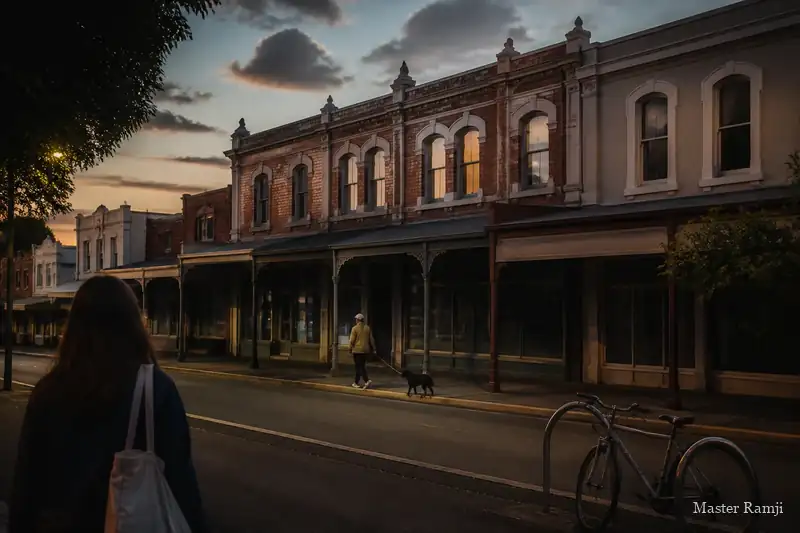
It might. The Puckle Street precinct is a commercial area with buildings dating mostly from about 1885 to 1940, recognised as locally significant to the City of Moonee Valley. The heritage statement describes Puckle Street as the main commercial centre of Essendon since the 1880s, and it notes the value of contributory buildings above ground floor level.
That matters if a consultant tells you to change a door or add something to the shopfront. Exterior changes and signs in a place like this may need more than your landlord's approval. Before you spend anything, ask Moonee Valley City Council, whose offices are in Kellaway Avenue. Its website also has a section on starting a business and a page on business permits. Ask what applies to your type of business.
What can vastu offer in a leased suite?
You can't move the door or the bathroom, and you don't need to. These choices are usually open to you:
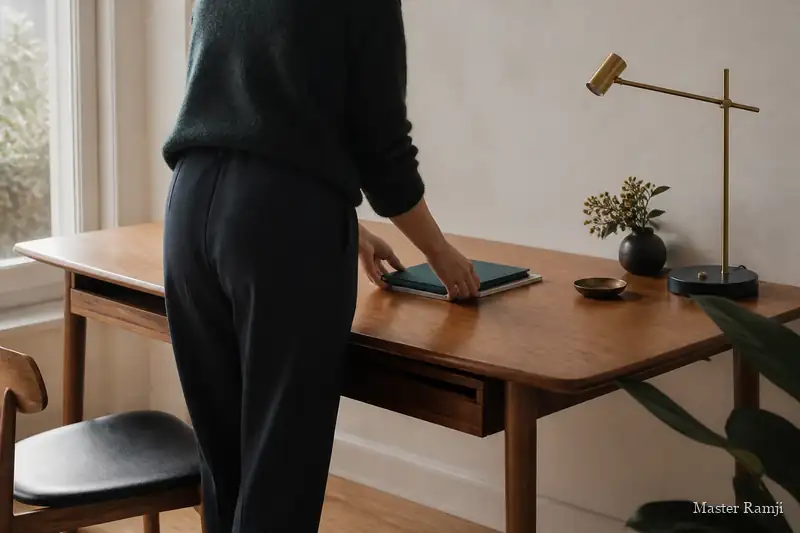
- Your desk. Sitting to face north or east is the common suggestion, with a solid wall behind you rather than a door or window. A desk near the south-west part of the room is often suggested for the owner.
- The entry. Keep the area inside your door clear and well lit. A first-time client should not have to step around boxes.
- Storage. Heavy shelves and filing cabinets are traditionally placed towards the south or west. Check how much the floor can hold in an older building, and fix tall units safely if the lease allows.
- The middle of the room. Traditionally this is left open. In a tiny suite, that may simply mean keeping the floor free of cables and clutter.
- Client seating. Some people suggest that visitors face east or north. In practice, keep window glare out of their eyes.
If your landlord's layout won't allow any of this, leave it. Exits, cords and a good chair come first. Practitioners also differ on how directions apply in Australia, as vastu in the southern hemisphere explains, so you may get different answers from different consultants. And if your suite has a counter and walk-in customers, vastu for a leased shop will suit you better.
One practical thought: clients have to find you. Moonee Ponds has a train station and trams along Mount Alexander Road, so give clear directions from them, and tell people which door and which floor. A good sign in the foyer will do more than a change of angle at your desk.
Which date counts when nothing really opens?
This is the real question for a small office. You may have several candidate dates:
- The day you sign the lease
- The day you get the keys
- The first day you work from the suite
- The day you see your first client
Lease dates and tax dates are set by the people and rules involved, so don't delay them for a muhurta. A rent start or a landlord's deadline won't wait for an auspicious moment. For most people, the easiest date to choose freely is the first working day or the first client. Which moment counts: registration or opening day? looks at this question from the registration side.
If you want to use a business muhurat, a reader will usually consider the weekday, tithi and nakshatra, and avoid periods such as Rahu Kaal. Rahu Kaal depends on local sunrise, and the rest need converting to local time, so work them out for Melbourne rather than copying an Indian calendar. Ask for a window of an hour or two across a few possible days. Traditions differ on the details, and no timing has been shown to affect how a business performs.
How do you mark a quiet opening?
You don't need a priest, a crowd or a havan. Many people prefer something small, before the workday starts:
- A short prayer to Ganesha, or whichever deity your family favours
- A small image or a clean lamp placed in a respectful spot
- Your first piece of real work done in that moment, such as sending an invoice or calling a client
- Sweets for the neighbouring tenants, which is a good way to meet them
Be careful with flames and incense. In a shared building, smoke can set off an alarm and affect other tenants. Ask the building manager how the system works and what the lease says, and use a battery lamp if there is any doubt. If you do want a formal ceremony, holding an opening puja covers what to arrange.

What shouldn't you pay for?
Be wary if someone says your office will fail unless you buy a remedy, knock out a wall or wait months for a date. Ask what the suggestion costs, whether the lease allows it, and what it could realistically change. An ethical consultant will tell you what the tradition can't do, and will state their fee before any paid work.
Real business risks need real advisers. An accountant can help with cash flow and tax, and business.gov.au is a good starting point for registrations. A chart or a floor plan can't replace them.
If you would like to talk it through, see vastu for shops and offices, and have your floor plan and lease handy. Vijay Ramji is based nearby in Ascot Vale, and sessions can be held by phone, WhatsApp or video. See our inner north-west guides for more, or get in touch.
Related service
Keep reading

From Overseas Qualification to Local Trade in Thomastown
Waiting on skills recognition in Thomastown? Who decides what, how to steady yourself during delays, and how to weigh a career change in Melbourne.
Read article →
Midlife Career Questions in Ringwood
Thinking about a midlife career change in Ringwood? How a dasha reading can support reflection, and the free advice and money checks to do first.
Read article →
Graduating in Clayton: What to Do With Career Timing
Graduating in Clayton with a visa clock and family expectations? What to sort out first, where to get free advice, and what career astrology can't decide.
Read article →More from Inner North-West Melbourne
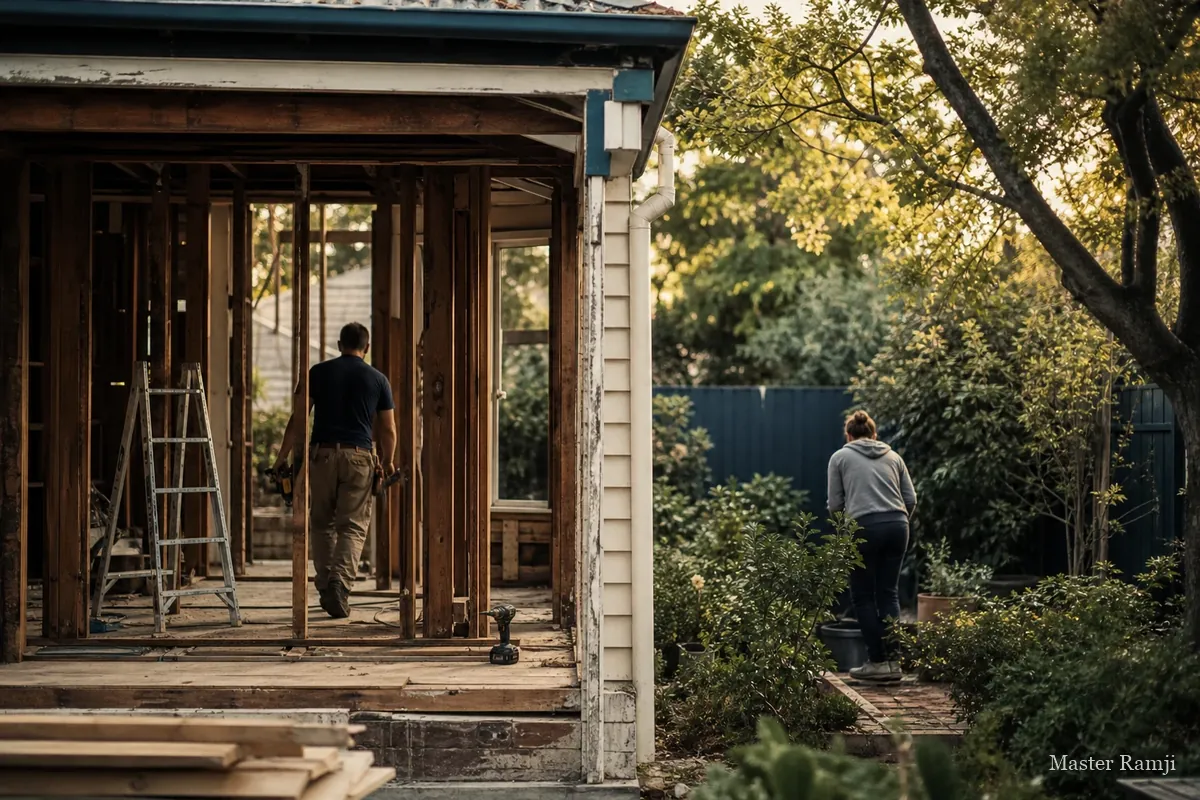
Renovating a Family Home in Essendon With Vastu
Already renovating in Essendon? Which vastu questions are worth raising while plans can still change, and what heritage, asbestos and contract checks come first.
Read article →
Is a Relationship Reading Right for Essendon Couples?
Thinking about a relationship reading in Essendon? Who it may suit, who should see a counsellor first, and what to do if you don't feel safe at home.
Read article →
Luck, Gambling and Astrology: A Word From Flemington
Astrology cannot predict gambling results. Why a chart can't pick winners, how to spot a lucky numbers scam, and where to find gambling help in Victoria.
Read article →Local pages
Astrologer in Ascot Vale
Vijay Ramji is a Vedic astrologer and spiritual healer based in Ascot Vale, Melbourne. Sessions are held by phone, WhatsApp or video, booked in advance.
View area →
Astrologer for Moonee Ponds
For Moonee Ponds homes, leased offices and family matches. Vijay Ramji is based in Ascot Vale, with sessions held by phone, WhatsApp or video.
View area →Astrologer for Essendon
For Essendon households weighing up renovations, parents and teenagers, or a mixed-faith family. Based in Ascot Vale, with sessions by phone, WhatsApp or video.
View area →Quick answers
Can astrology help me choose a career?
Astrology can prompt useful questions about work, but it can't pick your career. Here is what a chart may suggest, its limits, and who to ask for real advice.
Read answer →Which house shows career in Vedic astrology?
In Vedic astrology, the tenth house is the main house of career. Here is what else a reader looks at, where views differ, and what a chart can't tell you.
Read answer →Talk to Vijay Ramji
Tell us what you are facing. If a reading is unlikely to help, you will be told that plainly.