
Frequent Flyer Work and Family Near Airport West
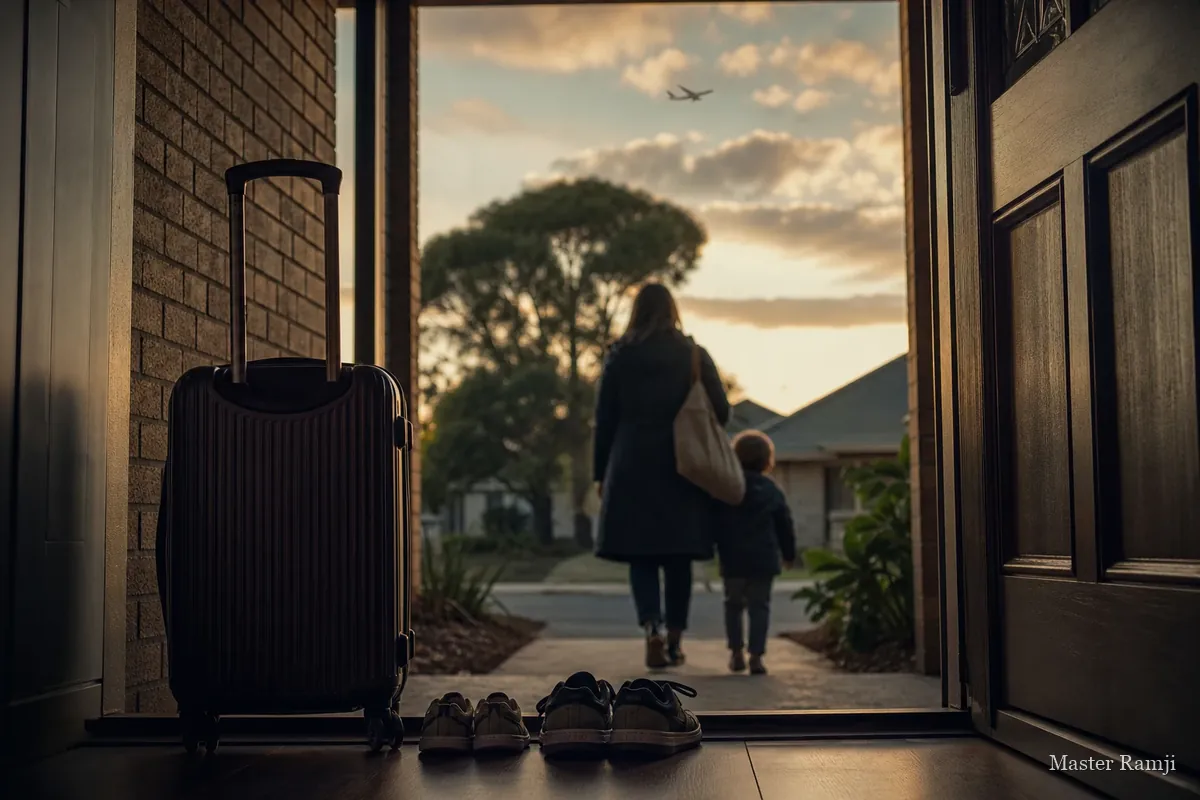
If travel for work is straining your family in Airport West, start with practical steps: a shared calendar, a set call time, a fair split of home tasks and a proper reconnection plan after each trip. Talk early, not only when tension peaks. Astrology can offer reflection on timing, but counselling suits deeper relationship strain.
Airport West is a triangle of homes and industry 12 km north-west of central Melbourne. Victorian Places describes it as bounded by the Tullamarine and Calder Freeways and a freight railway line, right beside the western edge of the airport at Essendon. Its Westfield shopping centre opened in 1976, with the tram terminating a short walk away.
With the Tullamarine Freeway at the door, it's an easy base for people whose jobs keep them on the move: flight crew, engineers, sales staff, consultants and project workers who fly out on Monday and home on Thursday. The location makes the travel easier. It doesn't make the time apart any easier for the partner and children at home. This article looks at how couples can keep a marriage, and a personal practice, steady through frequent work travel.
Key takeaways
- Frequent travel strains both the person leaving and the person staying. Both sides of the strain are real.
- Simple routines, such as a shared calendar and a set call time, prevent many arguments.
- The first day home is often the hardest. Plan it rather than hoping it goes well.
- If tension keeps building, see a relationship counsellor early rather than late.
Why does frequent work travel cause so much tension?
The travelling partner often comes home tired, jet-lagged and wanting rest. The partner at home has been running everything alone and wants help, or simply a break. Both feel they've earned some slack, and both can feel unseen.
Over time, small things build up. The person at home makes decisions alone and gets used to it. The traveller feels like a visitor in their own house. Children may act up before a trip or after a return. None of this means the marriage is failing. It means the household is adjusting, again and again, and that takes effort.
What routines help couples stay connected?
- Share one calendar. Put every trip, school event and bill due date in one place both of you can see. Fewer surprises means fewer fights.
- Agree on a call time. A short, regular call matters more than a long one squeezed in at midnight. Keep at least some calls free of logistics.
- Split the load fairly. The travelling partner can still own some tasks from afar, such as online bills, grocery orders or booking appointments.
- Protect weekends. If you can, avoid booking travel over important family days, and say no to extra trips when you can afford to.
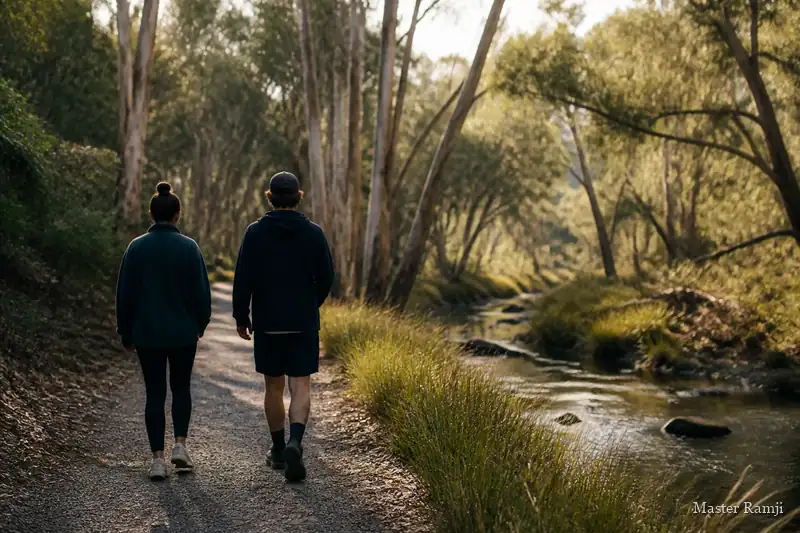
- Plan something local together. A walk along the Steele Creek linear park or a regular meal out gives you time that isn't about handover.
How do you handle the first day home?
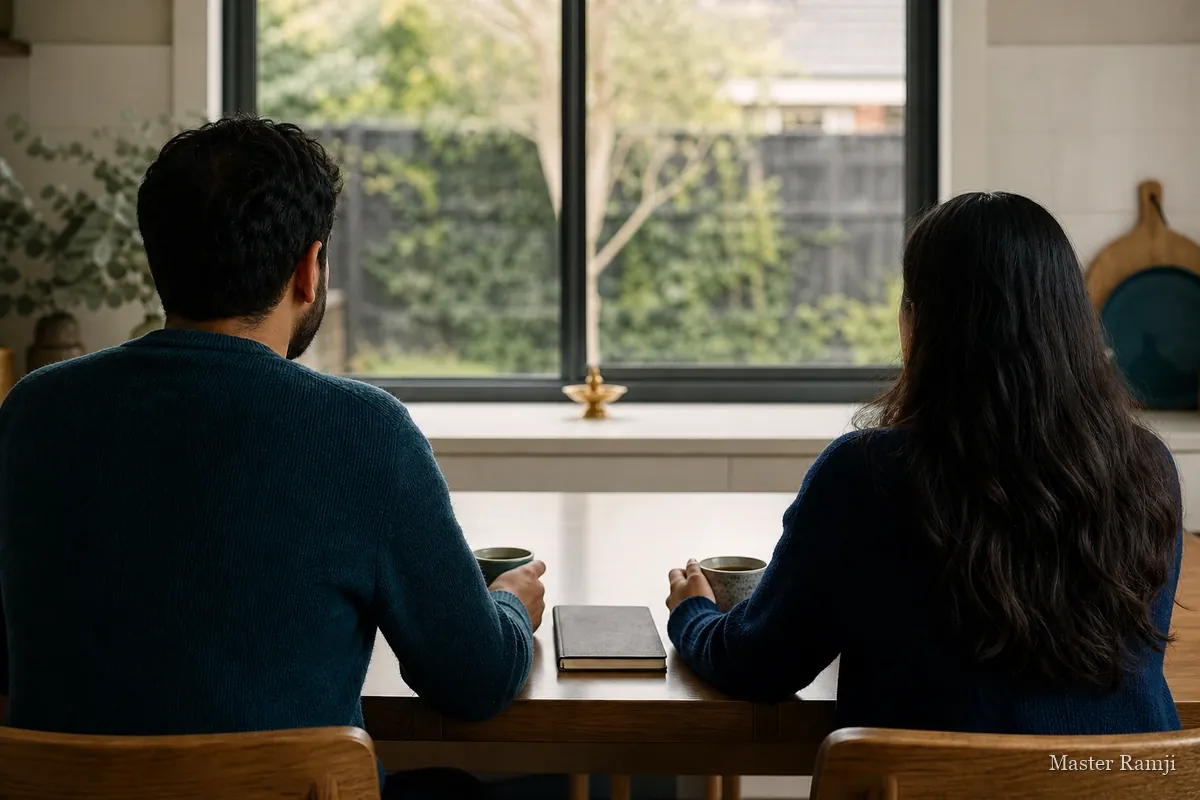
Many couples find homecoming harder than departure. Try agreeing on a simple pattern in advance. For example, the traveller gets an hour to unpack and rest, then takes over dinner or bedtime so the other partner gets a genuine break. Save serious conversations for the next day, when both of you have slept.
Children often do better with a small ritual, such as a story at bedtime or a short walk to the shops together, that marks "Dad's home" or "Mum's home" in a predictable way. Irregular schedules make predictability all the more valuable.
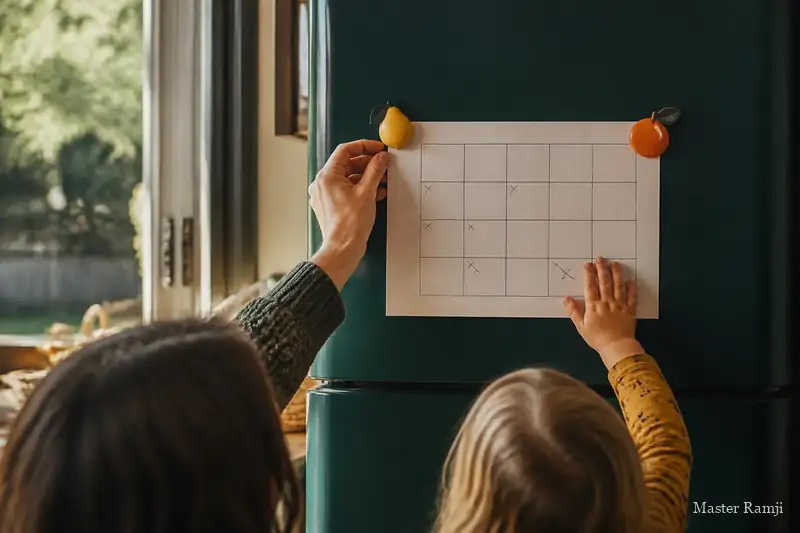
Before a trip, tell younger children plainly when you're leaving and when you'll be back. A paper calendar on the fridge, with days crossed off, helps them see the time pass. Older children may want a say in how calls work, such as a quick message after school rather than a long video chat at dinner.
What about sleep and wellbeing?
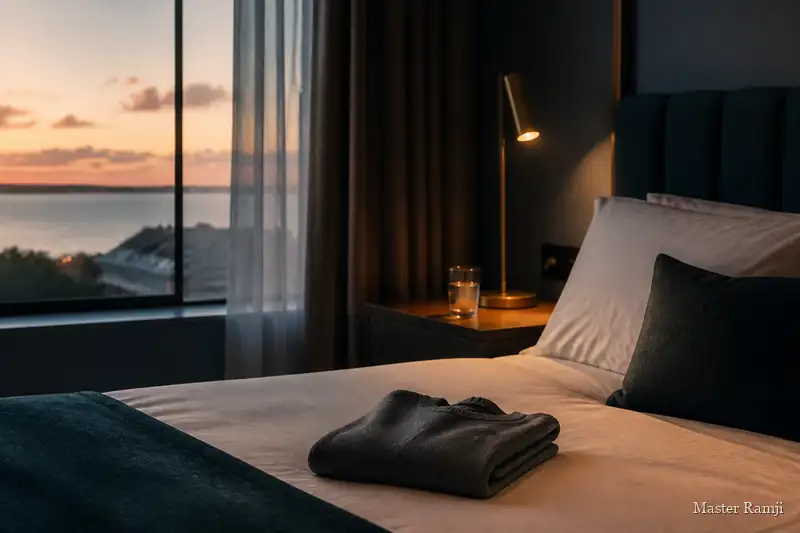
Constant time zone changes, early flights and hotel beds can wear anyone down. Poor sleep shortens tempers on both sides. If you travel often, keep a regular sleep window wherever you can, limit alcohol on flights and in hotels, and see a GP if fatigue or low mood hangs around. For the partner at home, a night off each week, swapped with a friend or relative, can make a real difference.
How can you keep a spiritual practice going on the road?
A practice that only works at home tends to fade when you travel. Keep it small and portable:
- A few minutes of quiet prayer or breathing in your hotel room each morning.
- A short mantra repeated silently while waiting at the gate. Mantra and meditation guidance can help you choose one that suits you.
- A small photo or image from your home shrine kept in your bag.
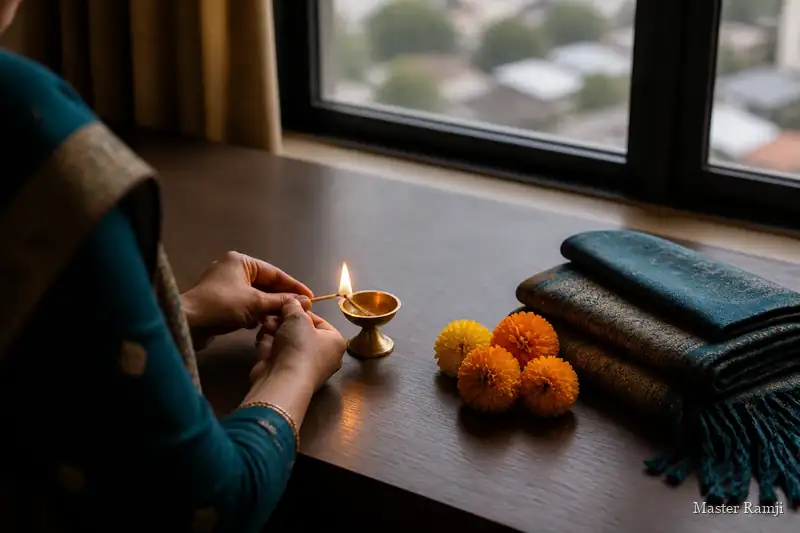
- Lighting a lamp together, on a video call, on a chosen evening each week.
Shared rituals across distance can help a family feel connected. They're a comfort and a habit, not a fix for deeper problems.
Can astrology help with career and travel decisions?
Some people find career astrology a helpful lens when weighing a role that involves heavy travel, or deciding when to ask for a change. A career timing reading looks at the periods in your own chart that tradition links with work and movement. It's a belief-based framework for reflection, not a prediction, and it can't tell you whether a job will strengthen or weaken your marriage.
A chart reading should be about your own chart, with your consent. Reading your spouse's chart without their agreement isn't appropriate. If you both want to look at timing together, that's a conversation to have openly. If the strain is mainly about distance, long-distance relationship guidance focuses on that side of things.
When is it time to get more help?
Seek support if arguments are getting more frequent or harsher, if one of you feels lonely most of the time, or if you've stopped talking about anything except logistics. Relationships Australia Victoria offers counselling for couples, families and individuals. A counsellor can help you sort out what's about travel and what's about something deeper.
If you feel afraid of your partner, or they control your money, phone or movements while you're apart or together, that isn't a travel problem. Call 1800RESPECT on 1800 737 732, or 000 in an emergency.
If you'd like a confidential conversation that brings tradition into the picture, sessions can be held by phone, WhatsApp or video, even from a hotel room interstate. You can read about our work in Melbourne's inner north-west or get in touch.
Related service

Keep reading
Two-Income Homes in Williams Landing: Timing Big Decisions
Two incomes, one mortgage, big choices. How Williams Landing couples can use astrology for reflection, while money decisions stay with a licensed adviser.
Read article →
Returning to Work From Officer After Parental Leave
Heading back to work after parental leave from Officer? Check your workplace rights, plan the commute and childcare, then see where career timing fits.
Read article →
Farming, Timing and Remedies: Staying Practical in Mildura
Thinking about astrology for your Mildura farm or orchard? What a chart can and can't do, scam warning signs, and where to get real farm financial help.
Read article →More from Inner North-West Melbourne
Airport Goodbyes at Tullamarine: Long-Distance Reality
The drive home from Tullamarine after a long-distance visit can hurt. Ways to handle the farewell, the first week after, and when to look for more support.
Read article →
Nazar Customs for Newlyweds: A Guide From Ascot Vale
Why families worry about nazar after a wedding, the simple customs many follow, how to do them safely at home, and when it's time to stop worrying.
Read article →
Common Sade Sati Questions Near Moonee Ponds
Common sade sati questions answered plainly for people in Moonee Ponds: how to check if it applies, what it can't predict, remedies and when to get support.
Read article →Local pages
Astrologer in Ascot Vale
Vijay Ramji is a Vedic astrologer and spiritual healer based in Ascot Vale, Melbourne. Sessions are held by phone, WhatsApp or video, booked in advance.
View area →
Astrologer for Moonee Ponds
For Moonee Ponds homes, leased offices and family matches. Vijay Ramji is based in Ascot Vale, with sessions held by phone, WhatsApp or video.
View area →
Astrologer for Essendon
For Essendon households weighing up renovations, parents and teenagers, or a mixed-faith family. Based in Ascot Vale, with sessions by phone, WhatsApp or video.
View area →Quick answers
Can astrology help me choose a career?
Astrology can prompt useful questions about work, but it can't pick your career. Here is what a chart may suggest, its limits, and who to ask for real advice.
Read answer →Which house shows career in Vedic astrology?
In Vedic astrology, the tenth house is the main house of career. Here is what else a reader looks at, where views differ, and what a chart can't tell you.
Read answer →Talk to Vijay Ramji
Tell us what you are facing. If a reading is unlikely to help, you will be told that plainly.