
Does Your House Number Matter?
In house number numerology, a street number is reduced to one digit and linked with a planet and a set of qualities. These meanings are traditional beliefs, and systems disagree about them. A number can't tell you anything about a home's condition, price or location, so it is a poor reason to pass on a good house.
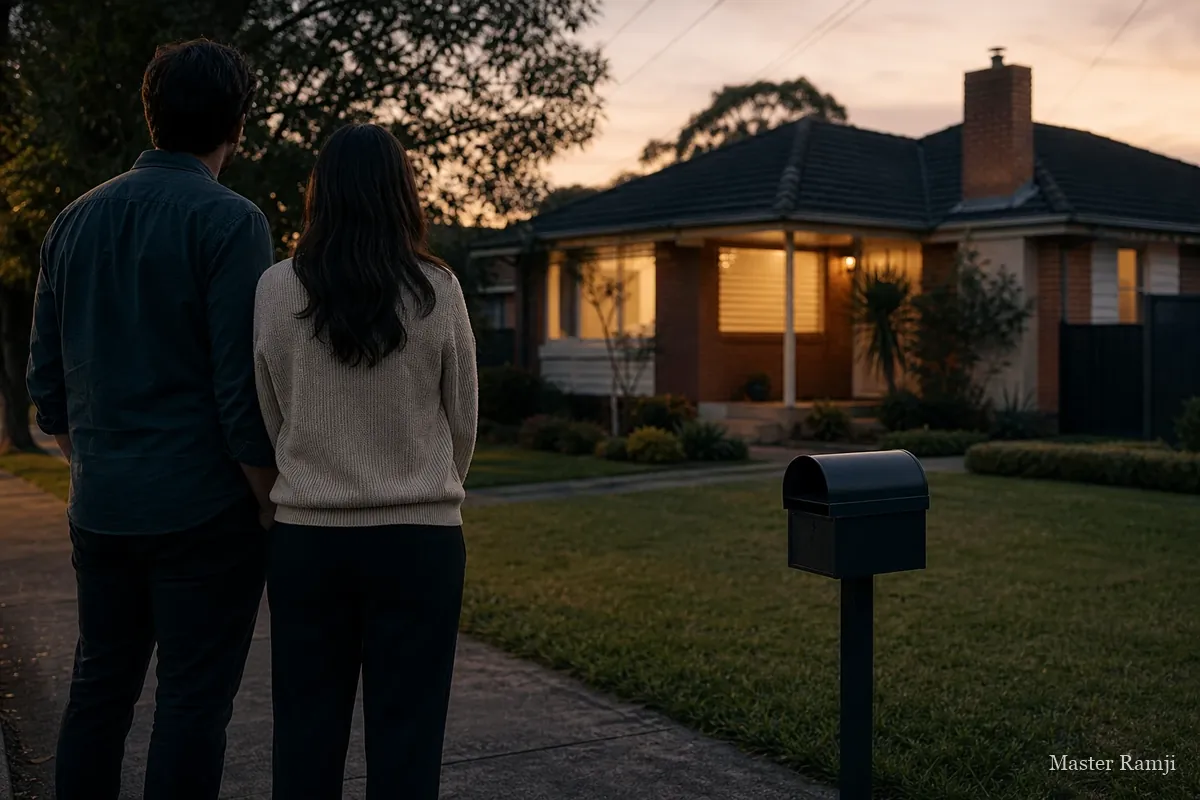
You've inspected a dozen homes. Finally one feels right: the price works, the layout suits the family, the school is close. Then someone adds up the street number and goes quiet. It comes to 8, or 4, and a parent on the phone from overseas is worried.
This happens to many families. This article sets out what the tradition actually says about house numbers, why the meanings vary so much, and the strong practical reasons not to let a number cost you a good home.
Key takeaways
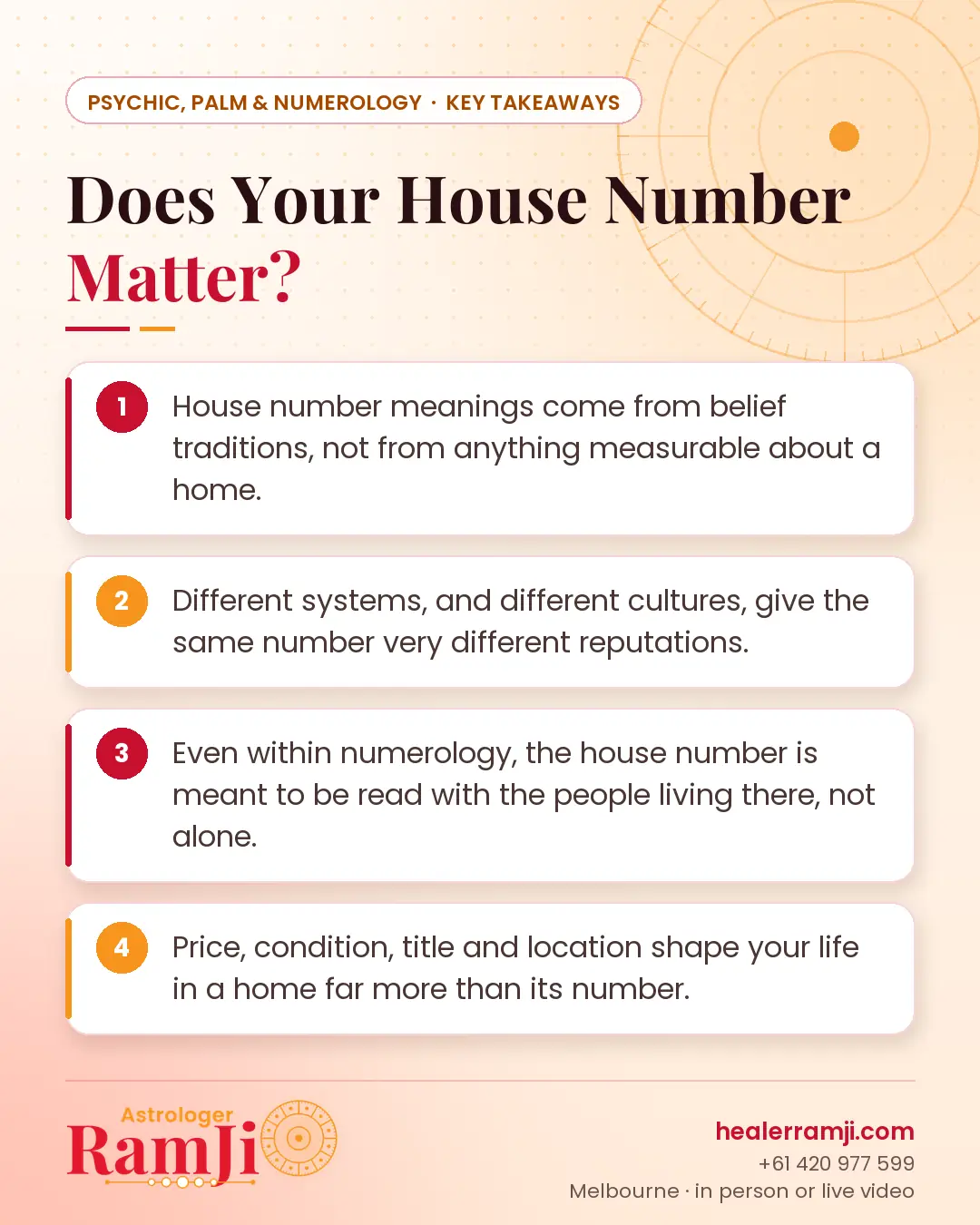
- House number meanings come from belief traditions, not from anything measurable about a home.
- Different systems, and different cultures, give the same number very different reputations.
- Even within numerology, the house number is meant to be read with the people living there, not alone.
- Price, condition, title and location shape your life in a home far more than its number.
How does house number numerology work?
Numerology is the belief in a mystical relationship between numbers and events. For a house, most practitioners add the digits of the street number until a single digit remains. Number 17 becomes 1 plus 7, which is 8. Number 106 becomes 1 plus 0 plus 6, which is 7.
Units, townhouses and lettered addresses are where methods split. Some readers use only the unit number, since that is your own front door. Others add the unit and street numbers together, and a letter such as 4B may be given a value or ignored. If two people give you different answers, this is usually why.
What does each number traditionally mean?
In Indian numerology, each digit is linked with one of the nine grahas. The qualities below are the broad traditional associations. Writers describe them differently, so treat them as themes, not verdicts.
- 1, the Sun. Independence, leadership, a home for people starting something new.
- 2, the Moon. Care, emotion, family closeness.
- 3, Jupiter. Learning, growth, hospitality.
- 4, Rahu. Hard work and sudden change. Often avoided by Indian families.
- 5, Mercury. Movement, communication, business and visitors.
- 6, Venus. Comfort, beauty, harmony at home.
- 7, Ketu. Reflection, spirituality, privacy.
- 8, Saturn. Discipline, patience, slow rewards. Often avoided by Indian families, yet prized by many Chinese families.
- 9, Mars. Energy, courage, activity.
Western writers often link 4 and 7 with Uranus and Neptune instead of Rahu and Ketu. Notice too that every number has easier and harder sides in the tradition. None is described as purely bad.
Why do the traditions disagree so much?
A number's reputation often comes from language and culture, not arithmetic. In Chinese, 4 sounds like the word for death and 8 sounds like prosperity. In Indian numerology, 8 is tied to Saturn and treated with caution. Some Western buildings skip a 13th floor. The same house could be one buyer's first choice and another's last.
That disagreement is worth sitting with. If a number's meaning depends on who is reading it, it is describing the reader's tradition, not the house.
What does the tradition itself say about the people in the house?
Careful numerologists don't read a door number alone. They compare it with the birth and name numbers of the people who will live there. A house that one reader calls hard for one person may be called supportive for another. So even on the tradition's own terms, "this number is unlucky" is an incomplete statement.
If you want that wider view, a numerology reading looks at the household's numbers together and explains what the tradition can't tell you.
What are the reasons not to pass on a good home?
- The cost of searching again. Every extra month means more inspections, more building reports and perhaps more rent. In a competitive market, the next suitable home may take a long time to appear.
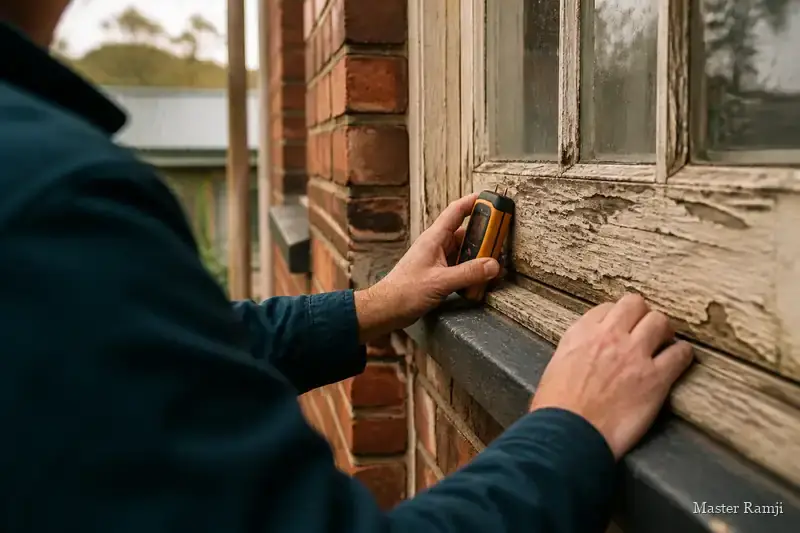
- The next house may have real faults. A pleasing number says nothing about damp, cracking, a busy road or a long commute.
- The number is administrative. Councils allocate street numbers to fit the pattern of a street. In a new estate, the lot number on your land contract is not your street address, so check what the final number will be before reading meaning into either.
- You live with the house, not the number. Light, warmth, space and neighbours shape daily life.
- Fear can become self-fulfilling. If you move in expecting trouble, you may read every ordinary setback as proof.
Before you decide, work through Consumer Affairs Victoria's due diligence checklist for home buyers. It prompts you to look at planning, building permits, flooding and other issues that matter far more. For contract questions, speak to a conveyancer or lawyer, and for loans, your lender or a licensed adviser.
How can you weigh the number fairly?
Try this order:
- Assess the home on its own merits: price, building report, title, location and commute.
- Decide whether you would buy it if the number were different.
- If the answer is yes, ask how much the number really matters to the people who will live there, not to relatives who won't.
- Only if two homes are equally sound, use a number you feel good about as a tiebreaker.
Agreeing on this order as a family before you start inspecting saves painful arguments later.
What if a parent or elder is still worried?
Take the worry seriously, because it usually comes from love. Explain the checks you have done, and ask what would put their mind at ease. Many families mark the move with a small prayer or a griha pravesh, which gives the worry somewhere to go. Our guide to griha pravesh in Australia explains the practical side. A clean, well-lit entrance and a welcoming name plate are other gentle traditional touches.
Be wary of anyone who says a number will bring disaster, or who asks for a large fee to fix it. Fear is not a sound basis for one of the biggest purchases of your life.
Does it matter if you rent?
Even less. A lease is short, and your choice of rental is usually shaped by price and availability. Pick the home that suits you and keep any traditions small and portable.
Where can you read more?
If you are buying in Melbourne's south-east, our article on house numbers and buying in Oakleigh looks at the same question in a multicultural suburb. On inspection day, our vastu checklist for open inspections may help too. Sessions can be held by phone, WhatsApp or video, and fees are stated before paid work. If you have a question, get in touch.
Related service
Keep reading
Using Numerology for a Business Name
Business name numerology works best last: after availability, trade mark and plain sound checks. How letter values are counted, and why systems disagree.
Read article →
Changing Your Name in Victoria: Before You Start
Thinking of a name change in Victoria for numerology? The BDM steps, fee, limits and paperwork to weigh first, and a cheaper way to test a new spelling.
Read article →
Numerology and Baby Names
How baby name numerology works, why two systems give different numbers, and how to weigh meaning, family wishes and practical spelling before the numbers.
Read article →Quick answers
What is a destiny number?
A destiny number is a numerology figure worked out from your birth name or birth date, depending on the system. Here is how to calculate it both ways.
Read answer →What is the difference between a psychic and an astrologer?
An astrologer works from a chart calculated from birth details, while a psychic relies on intuition. Here is how that changes what each reading can offer.
Read answer →Talk to Vijay Ramji
Tell us what you are facing. If a reading is unlikely to help, you will be told that plainly.