
What to Expect at Your First Psychic Reading

At a first psychic reading, expect a conversation in which the reader shares impressions about your question for you to weigh up. Prepare one to three open questions, ask the fee first, decide what you won't share, and take notes. Afterwards, wait a day or two and check what was specific before acting on anything.
A first psychic reading can feel exciting and a little nerve-racking. You may not know what will happen, how much to say, or what to do with what you hear. That uncertainty is exactly when people tend to hand over too much trust.
This guide is about preparation. It covers what a session usually looks like, how to go in with good questions, and a few simple habits that help you keep your own judgement before, during and after.
Key takeaways
- A reading is a conversation about impressions. There is no scientific evidence that psychic ability exists.
- Open questions about your own choices work better than questions about other people.
- Taking notes lets you check later which statements were specific and which could fit anyone.
- Leave at least a day between a reading and any big decision.
What usually happens in a first session?
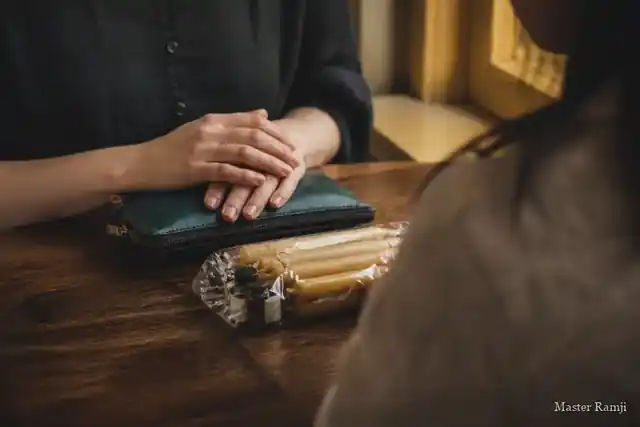
Formats vary. Some readers use cards, some ask to hold an object, and many simply talk. Some readers work face to face, and many also offer sessions by phone or video. Most begin by asking what brought you there, then offer impressions and check whether they fit. Near the end, there is usually time for your own questions.
The fee and length should be clear before you start. If they aren't, ask. A fair reader will answer without fuss.
Emotionally, first readings affect people in different ways. Some people leave feeling lighter because they have said something aloud for the first time. Others feel unsettled, or disappointed that nothing seemed to fit. All of these are normal reactions, and none of them means the session went wrong.
How should you prepare beforehand?
Check how you are feeling
If you are newly bereaved, in a crisis or about to make a major decision, a confident voice can carry too much weight. It may be wiser to wait. If you are struggling, Lifeline is on 13 11 14 at any hour.
Choose one to three questions
The quality of your questions shapes the whole session. Compare these:
- Harder to use: "Will he come back?" "Is she cheating?" "Will I get the job?"
- More useful: "What am I not seeing about this relationship?" "What should I weigh before I accept this offer?" "Why do I keep ending up in the same situation?"
Questions about another person's thoughts or actions can't be answered by anyone. Questions about your own choices give you something to reflect on, whatever you make of the reading itself.
Decide what you won't share
You don't have to give your surname, your workplace or anyone else's details. Decide in advance what stays private. It protects your privacy, and it also makes it easier to tell later whether a detail came from the reader or from you.
Set a budget
Decide what you will spend before the session, and stick to it. A first reading should never lead to a second purchase on the same day.

Why can a reading feel so accurate?
Partly because of a well-known effect in psychology. In 1948, the psychologist Bertram Forer gave 39 of his students what they thought were personal profiles. As described in this account of the Barnum effect, every student received the same text, taken from a newsstand astrology book. On a scale from 0 to 5, they rated its accuracy at 4.30 on average.
The effect is stronger when statements are vague, mostly positive, and come from someone the listener trusts. Phrases like "at times you doubt yourself" fit almost everyone. That doesn't mean every reader is trying to trick you. It does mean that feeling understood is not proof of special knowledge.
How do you keep your judgement during the reading?
- Write things down. Note specific statements as closely as you can. Ask before recording the call.
- Say when something doesn't fit. "That doesn't match my life" is useful information. A reader shouldn't argue with you about your own experience.
- Ask "what makes you say that?" A thoughtful reader can admit when something is only an impression.
- Notice your own answers. Details you mentioned early on can come back later sounding like insight.
- Watch your reactions. If you feel rushed, frightened or flattered, slow down.
What should you do afterwards?
Give it a day or two. Then read your notes and sort them into three groups:
- Specific and correct. Things the reader couldn't easily have guessed or picked up from you.
- General. Statements that would fit most people, such as "you give more than you receive".
- Wrong. The misses, which we tend to forget first.
Most people find the second group is the biggest. That isn't a failure. It simply shows you what the reading can and can't carry. Then ask yourself one question: would I make this decision even if the reading had never happened? Our article on using a reading without giving away your decisions goes further into this.
What should make you walk away?
A few signs are clear. Be careful if a reader says you are cursed and offers to fix it for a fee, demands a quick decision, or keeps finding new problems with new prices. WA ScamNet's guidance on psychic scams warns about vague statements that could be true about anyone, threats of bad luck if you don't pay, and deadlines such as "reply within 24 hours". Our list of psychic reading red flags covers what to say and what to do if you have already paid.
No reading should tell you to stop medical treatment, cut off your family or make a money, legal or visa decision. Those belong with a GP, a lawyer, a licensed adviser or the relevant authority.
Is a psychic reading the right choice for your question?
Not always. If you want to look at timing or long-term patterns, an astrologer works from your birth chart instead. Choosing between a psychic and an astrologer can help you decide. If a psychic reading suits you, our psychic reading page sets out what an intuitive session can and can't claim, and any fee is stated before paid work begins.
If you have questions before booking, get in touch.
Related service

Keep reading
How to Use a Reading Without Giving Away Your Decisions
Should you trust a psychic for decisions? How to use a reading as a prompt rather than an instruction, and keep big choices about health, money and love your own.
Read article →
Samudrika Shastra: An Introduction
Samudrika Shastra meaning, history and branches explained, plus why this old tradition of reading the body should never be used to judge or screen other people.
Read article →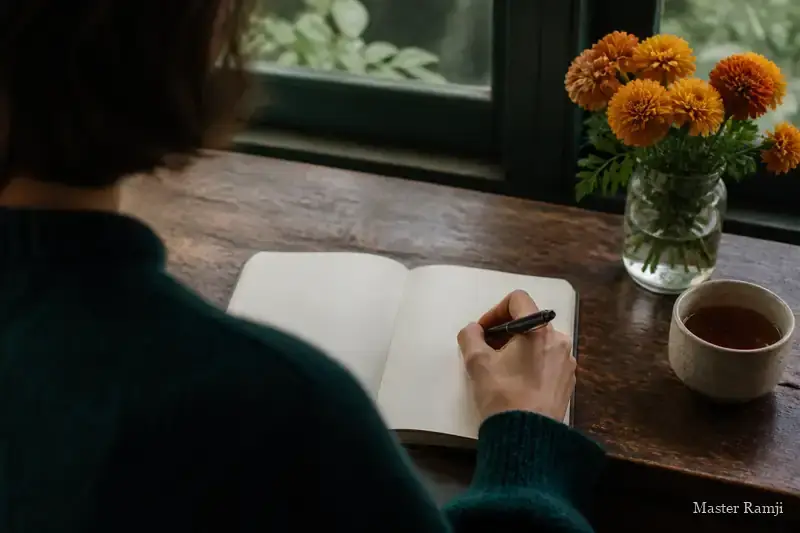
How to Work Out Your Birth and Destiny Numbers
How to calculate your destiny number and birth number, step by step, with a worked example, a check for master numbers, and the name-based method compared.
Read article →Quick answers
What is the difference between a psychic and an astrologer?
An astrologer works from a chart calculated from birth details, while a psychic relies on intuition. Here is how that changes what each reading can offer.
Read answer →Are psychic readings real?
Readings can feel real and meaningful, but no scientific proof shows that psychic powers exist. Here is what a reading can offer and when to walk away.
Read answer →Talk to Vijay Ramji
Tell us what you are facing. If a reading is unlikely to help, you will be told that plainly.