
The First Month After a Breakup

The first month after a breakup is usually about getting through the days, not making big decisions. Look after your sleep and meals, lean on people you trust, set clear limits on contact with your ex, and postpone major choices. If the pain feels unmanageable, speak to a GP or a support service.
In the first days after a breakup, even small tasks can feel impossible. You may check your phone constantly, replay old conversations, or want to do something immediately to fix it. When you are in that state, advice to "move on" isn't much use.
This guide offers something more modest: a steady plan for the first four weeks. You don't have to follow it exactly. Take what helps you and leave the rest.
Key takeaways
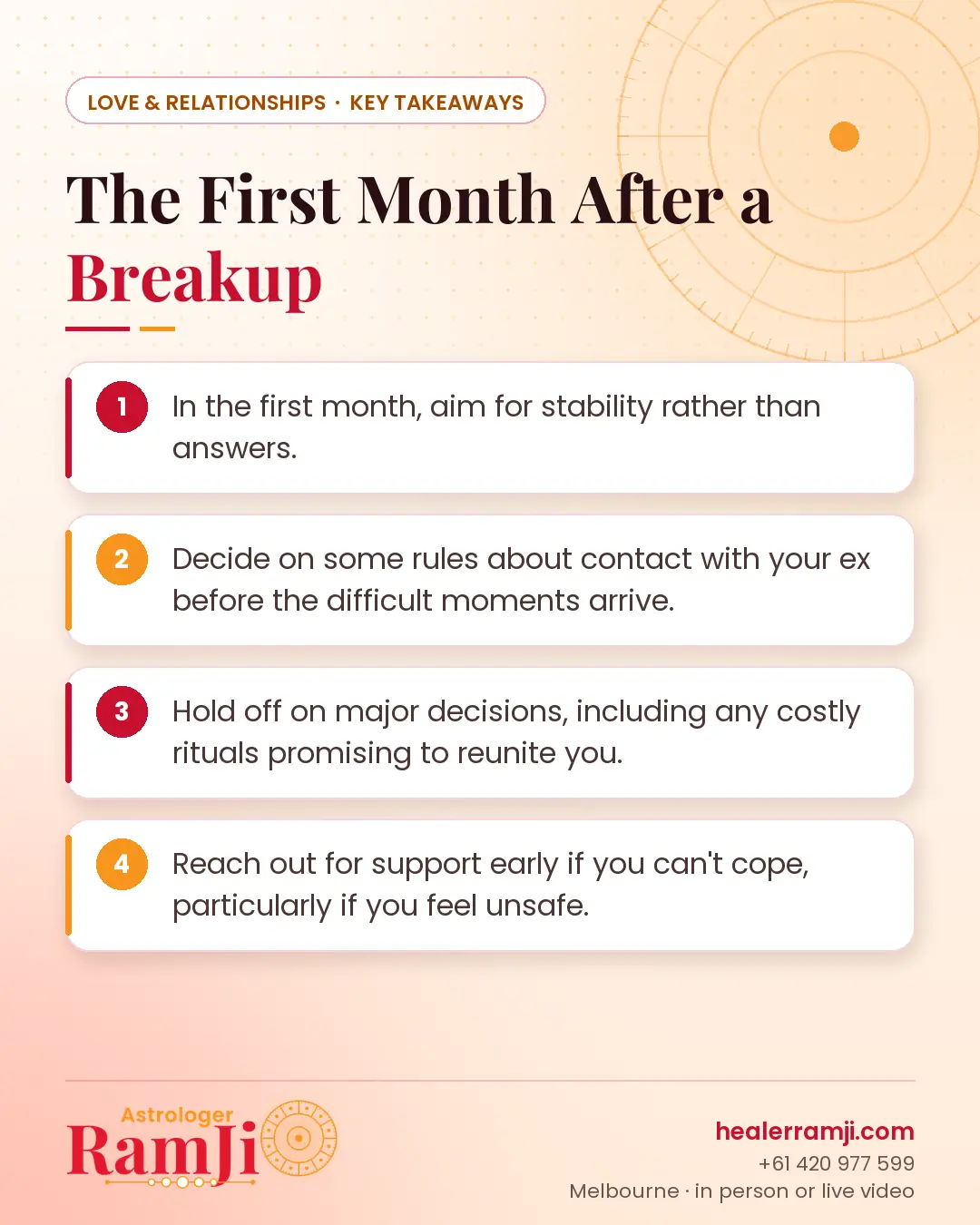
- In the first month, aim for stability rather than answers.
- Decide on some rules about contact with your ex before the difficult moments arrive.
- Hold off on major decisions, including any costly rituals promising to reunite you.
- Reach out for support early if you can't cope, particularly if you feel unsafe.
Week one: How do you just get through it?
This week is about the basics. Grief, shock and disrupted routines can all affect your appetite and sleep, so look after them deliberately.
- Eat something at regular times, even if you aren't hungry. Keep it simple.
- Keep a basic routine. Get up at about the same time and step outside for a few minutes each day.
- Tell one or two people. Choose those who will listen without telling you what to do. You don't need to tell your whole family yet.
- Be careful with alcohol. It can make low moods and poor sleep worse.
- Move the reminders out of sight. You needn't throw anything away. A box in a cupboard will do.
If you live in a shared house, far from family, or in a new country, this week can be particularly lonely. A regular phone call with someone at home, even when you have little to say, can be a real anchor.

Week two: How should you handle contact with your ex?
This is when many people feel the strongest urge to send a long message. Before you do, decide what kind of contact makes sense. In general, a period of less contact gives you both room to think, unless you have children or practical matters to sort out.
Try these practical limits:
- Mute or unfollow your ex on social media, so that you aren't seeing their updates all day
- If you share children, a home or bills, keep your messages brief and stick to those subjects
- Write any urgent message in your notes first, and wait a day before deciding whether to send it
- Avoid asking mutual friends to pass on messages or report back
If your ex has asked you not to contact them, respect that completely. Repeated contact won't change how they feel, and it can cause real distress. Our article on whether to contact your ex covers this in more depth.
Week three: How do you start to make sense of it?
Once the shock has eased a little, you may be ready to look at what happened. Try writing down answers to these questions, without showing them to anyone:
- What was good about this relationship, honestly?
- What was already not working before it ended?
- What did I keep overlooking, and why?
- Which of these patterns have I noticed before?
- What do I miss: this person, or the life I expected to have?
Be fair to yourself and to them. The goal isn't to decide who was right, and it's fine if your answers change from one day to the next.
In many Indian and South Asian families, a breakup can involve extra pressure, especially if your parents knew your partner or there were marriage plans. You don't need to explain everything to everyone. Agree with one trusted relative on what to tell the others, and let that person help to keep the questions under control.

Week four: What should you start rebuilding?
By now, you may have some better days, along with some setbacks. That's normal. It often helps to start adding things back in:
- One activity you had let go, such as a class, a sport or time at your temple or community group
- Regular plans with friends, so that your week has a shape
- A small practice to steady yourself, such as prayer, lighting a lamp or a few minutes of quiet breathing
- One practical goal unrelated to the relationship
This isn't about pretending that you're fine. It is about reminding yourself that your life is bigger than this one loss.

What decisions should you put off?
A breakup isn't the best time for big, hard-to-reverse decisions. Where you can, wait before you move cities, quit your job, sign a lease alone or make a major purchase. Some things do have deadlines, so get proper advice if you need to make a decision about a shared home or legal matter.
You should also be especially careful about paying for anything that promises to bring your ex back. People who are hurting are often targeted by ads for quick fixes. Our article on why to distrust get-your-ex-back promises explains what to look out for.

When should you get more support?
Sadness after a breakup is normal, but you shouldn't have to carry everything alone. Consider speaking to a GP or a counsellor if you still can't sleep, eat or work after a few weeks, if you are relying on alcohol or drugs, or if things seem to be getting worse. Beyond Blue offers support for anxiety and depression, and Relationships Australia Victoria provides relationship counselling.
If you feel unable to keep yourself safe, please get help now. Call 000 in an emergency, or call Lifeline at any time on 13 11 14. You can also read healthdirect's list of crisis supports.
If your ex has threatened you, or you are afraid of them, your safety comes before anything else in this article. 1800RESPECT is confidential and available on 1800 737 732.
Where does a reading fit in?
For some people, a reading can be a helpful way to reflect once the first shock has passed. A breakup clarity session is designed for this. It can help you put the relationship into context, look at recurring patterns, and think about timing. It won't tell you what your ex is thinking, and it won't replace counselling or medical care.
There's no need to rush. See whether to get a reading right after a breakup for a short answer. If all you have managed this month is to get through it, that is enough.
Related service
Keep reading

Should You Contact Your Ex? Questions to Ask First
Thinking of messaging your ex? Honest questions to ask first, when contact should stop altogether, and how to keep it practical if you share children or bills.
Read article →
When Getting Back Together Is the Wrong Goal
Missing someone doesn't mean you should go back. Signs that moving on is the better outcome, what family pressure can hide, and what a real second chance needs.
Read article →
Why You Should Distrust Get-Your-Ex-Back Promises
Promises of a guaranteed reunion prey on people in pain. Learn the warning signs of an ex back spell scam, how the fees escalate, and what to do if you've paid.
Read article →Quick answers
Should I get a reading right after a breakup?
Often it helps to wait before getting a reading after a breakup. Here is why, what to try first, and how to tell when you are ready for one.
Read answer →Can astrology bring my ex back?
No, astrology can't make your ex come back, and nobody can honestly promise it. Here is what a reading can help with, and how to avoid costly promises.
Read answer →Talk to Vijay Ramji
Tell us what you are facing. If a reading is unlikely to help, you will be told that plainly.